 Fusing the talents of Robert Fripp, Trey Gunn, and the California Guitar Trio, you'd be wrong to assume that The Bridge Between is a boring album of guitar aerobics for guitar enthusiasts. This is a wonderful piece of work. Its most dubious attribute is to sometimes descend into Sky (the Anglo-Australian outfit formed by John Williams, Francis Monkman etc) territory in its medieval harpsichord delivery ("Passacaglia," "Contrapunctus"). However "Kanon Power" and standouts "Bicycling to Afghanistan" and "Blockhead" are fretboard knitted excellence. Unfortunately, the latter two are separated by a five-minute downbeat -- "Blue" -- and the set is spoiled by a near-13-minute endgame "Threnody for Souls in Torment," which would be better placed elsewhere. None the less, you can always hit the stop button after "Passacaglia" or better, stick "Afghan" and "Blockhead" on repeat! Kelvin Hayes
Tracklist :
1. Kan-Non Power 4:02
Hideyo Moriya
2. Yamanashi Blues 2:41
Bert Lams
3. Hope 5:32
John Sinks
4. Chromatic Fantasy 1:37
Johann Sebastian Bach
5. Contrapunctus 5:00
Johann Sebastian Bach
6. Bicycling to Afghanistan 3:22
Curt Golden
7. Blue 5:35
Robert Fripp / Trey Gunn
8. Blockhead 3:19
Paul Richards
9. Passacaglia 6:58
Johann Sebastian Bach
10. Threnody for Souls in Torment 12:51
Robert Fripp / Trey Gunn
Credits :
Robert Fripp - Guitar, Frippertronics
Bert Lams, Hideyo Moriya - Acoustic Guitar
Paul Richards - Acoustic Guitar, Fuzz E-bow Guitar
Trey Gunn - Chapman Stick
6.6.25
THE ROBERT FRIPP STRING QUINTET — The Bridge Between (1993) Three Version | WV + FLAC (image+.tracks+.cue), lossless


5.6.25
LARRY CARLTON — Last Nite (1986) Two Version | APE + FLAC (image+.tracks+.cue), lossless

Tracklist :
1 So What 7:58
2 Don't Give It Up 5:30
3 The B.P. Blues 7:50
4 All Blues 7:50
5 Last Nite 7:58
6 Emotions Wound Us So 6:17
Credits :
Guitar – Larry Carlton
Bass – Abraham Laboriel
Drums – John Robinson, Rick Marotta (tracks: B1)
Keyboards – Terry Trotter
Percussion – Alex Acuña
Saxophone – Marc Russo
Trumpet – Gary Grant, Jerry Hey

BUD POWELL TRIO - Bouncing with Bud (1962) RM | MONOAURAL | 24 Kt Gold Plated | Original Master Recording, Ultradisc II Series | Three Version | FLAC (image+.tracks+.cue), lossless

Although Bud Powell's performance level could widely vary during the last few years of his life, this
1962 session in Copenhagen finds him in top form. Joined by promising
young bassist Niels Pedersen and drummer William Schiopffe, Powell
literally wails along as he plays the works of fellow boppers such as
Thelonious Monk ("Straight, No Chaser" and "52nd Street Theme"), Tadd
Dameron ("Hot House"), Denzil Best ("Move"), as well as his own
"Bouncing With Bud." He also delves into a breezy take of Irving
Berlin's "The Best Thing for You" and Coleman Hawkins' "Rifftide" (a
familiar reworking of "Oh, Lady Be Good!"). Even though the music pretty
much stays at a fairly brisk to fast tempo, there's no danger of
listener burnout. Originally issued by Sonet, the selections on this
highly recommended Storyville CD have also been issued on a number of
other labels. Ken Dryden
Tracklist :
1 Rifftide 4:10
Coleman Hawkins
2 Bouncing with Bud 5:57
Gil Fuller / Bud Powell
3 Move 4:57
Denzil Best
4 The Best Thing for You 6:00
Irving Berlin
5 Straight, No Chaser 6:40
Thelonious Monk
6 I Remember Clifford 6:07
Benny Golson
7 Hot House 5:47
Tadd Dameron
8 52nd Street Theme 2:22
Thelonious Monk
Credits :
Bass – Niels Henning Orsted Pedersen
Drums – William Schiöpffe
Piano – Bud Powell 
DE DE LIND — Io Non So Da Dove Vengo E Non So Dove Mai Andrò. Uomo È Il Nome Che Mi Han Dato (1973) RM | Two Version | FLAC (tracks+.cue), lossless

Mention De De Lind to most aficionados of Italian progressive rock and, chances are, they will come right back at you with the band's best known claim to fame -- one of the longest LP titles ever accepted by a major label (Mercury) -- Io Non So da Dove Vengo e Son So Dove Mai Andrio, Uomo è il Nome Che Mi …. Even more impressively, most of those aficionados will then inform you that it is one of the genre's finest ever releases, and send you out in search of it, on either its original vinyl or via the 1990 Mercury CD reissue.
De De Lind formed in 1969, with a lineup of Vito Paradiso (vocals, acoustic guitar), Gilberto Trama (flute, sax, keyboards), Matteo Vitolli (guitar), Eddy Lorigiola (bass), and Ricky Rebajoli (drums). Signing to the Windsor label, they released the single "Anche se Sei Qui"/"Come si Fa?" that same year, before being scooped up by Mercury. Two singles followed over the next two years, "Mille Anni"/"Ti Devo Lasciare" in 1970, and "Signore Dove Vai"/"Torneremo Ancora" the following year. Io Non So da Dove Vengo e Son So Dove Mai Andrio, Uomo è il Nome Che Mi … was released in 1972, and proved to be the band's last stand. By the end of the year, De De Lind had vanished, with only vocalist Paradiso ever resurfacing, for a short-lived solo career during the late '80s. Dave Thompson
Tracklist :
1. Fuga E Morte (7:21)
2. Indietro Nel Tempo (4:18)
3. Paura Del Niente (7:46)
4. Smarrimento (8:00)
5. Cimetero Di Guerra (5:20)
6. Voglia Di Rivivere (3:35)
7. E Poi (2:05)
Personnel :
Vito Paradiso - Vocals, Acoustic Guitar
Gilberto Trama - Flute, Saxophone, Keyboards
Matteo Vitolli - Guitar, Percussion, Piano, Flute
Eddy Lorigiola - Bass
Ricky Rebajoli - Drums, Percussion 
BIRÉLI LAGRÈNE & JACO PASTORIUS — Stuttgart Aria (1986) Three Version | Vynil LP 24-96Hz + WV + FLAC (image+.tracks+.cue), lossless

-> This comment is posted on Allmusic by Thom Jurek, follower of our blog 'O Púbis da Rosa' <-
Tracklist :
1. American boy (4:40)
Jan Jankeje / Biréli Lagrène / Jaco Pastorius / Vladislav Sendecki
2. Donna lee (4:40)
Charlie Parker
3. Stuttgart Aria 1 (7:36)
Jan Jankeje / Biréli Lagrène / Jaco Pastorius / Vladislav Sendecki
4. Jaco reggae (5:58)
Jan Jankeje
5. The chicken (5:47)
Pee Wee Ellis
6. Teresa (8:51)
Jaco Pastorius
7. Stuttgart aria Nº2 (10:04)
Jan Jankeje / Biréli Lagrène / Jaco Pastorius / Vladislav Sendecki
8. The days of wine and roses (6:26)
Henry Mancini / Johnny Mercer
Credits :
Backing Vocals, Bass [Synthesizer] – Jan Jankeje (tracks: 6, 8)
Drums – Peter Lübke
Electric Bass [Fender 86], Piano, Vocals – Jaco Pastorius
Electric Guitar, Backing Vocals – Bireli Lagrene
Keyboards, Synthesizer – Vladislaw Sendecki
Percussion, Backing Vocals – Serge Bringolf

4.6.25
CHRIS POTTER — Unspoken (1997) 24-44.1Hz | FLAC (tracks+.cue), lossless

Tracklist :
1 Wistful 7:45
Chris Potter
2 Seven Eleven 9:08
Chris Potter
3 Hieroglyph 6:00
Chris Potter
4 Amsterdam Blues 7:50
Chris Potter
5 Et Tu, Bruté? 7:12
Chris Potter
6 Unspoken 5:41
Chris Potter
7 No Cigar 5:18
Chris Potter
8 Time Zone 8:55
Chris Potter
9 New Vision 7:11
Chris Potter
Credits :
Chris Potter - Sax (Soprano), Sax (Tenor)
Jack DeJohnette - Drums
Dave Holland - Bass
John Scofield - Guitar

YELLOWJACKETS — Lifecycle (2008) FLAC (tracks+.cue), lossless
 The Yellowjackets needed a guest guitarist, who would be the best person for the job? Pat Metheny would be an excellent choice, as would Al di Meola, John McLaughlin, Larry Coryell, or John Scofield. Well, the Yellowjackets did hire a guest guitarist for Lifecycle -- an excellent and well-known guitarist, in fact -- and they feature him extensively on this 2008 release. The guitarist is Mike Stern, who enjoys a strong rapport with the Yellowjackets' 2008 lineup: Russell Ferrante on acoustic piano and electric keyboards, Jimmy Haslip on electric bass, Bob Mintzer on tenor and soprano sax and bass clarinet, and Marcus Baylor on drums and percussion. Stern and the Yellowjackets are a perfectly logical combination -- especially in light of the hell-bent-for-jazz direction the Yellowjackets have favored since 1991's Greenhouse. With Greenhouse (which was Mintzer's first album with the outfit), Ferrante and Haslip made it clear that they wanted the Yellowjackets to be considered a serious, heavy-duty jazz combo instead of a group that pandered to smooth jazz stations. That isn't to say that the Yellowjackets' 1980s output lacks merit -- many of their '80s recordings are quite creative -- but with Greenhouse, Ferrante and Haslip really emphasized their Weather Report/Miles Davis/Return to Forever heritage. And that mindset continues to serve the Yellowjackets well 17 years later on Lifecycle. Jazz purists and bop snobs, of course, would argue that if you use electric instruments and have been influenced by rock or funk in any way, you aren't playing jazz, but the truth is that Stern and the Yellowjackets do bring a serious jazz improviser's mentality to engaging tracks like Haslip's bluesy "Country Living," Mintzer's mysterious "Falken's Maze," and Ferrante's probing, somewhat John Coltrane-ish "Measure of a Man." With its blend of electric and acoustic instruments, Lifecycle is relevant to both fusion and post-bop -- and it is also proof that collaborating with Stern was a very wise move for the Yellowjackets. Alex Henderson
Tracklist :
1 Falken's Maze 6:25
Written-By – B. Mintzer
2 Country Living 6:24
Written-By – J. Haslip
3 Double Nickel 6:42
Written-By – M.Stern
4 Dreams Go 6:49
Written-By – M.Stern
5 Measure Of A Man 7:33
Written-By – R.Ferrante
6 Yahoo 4:52
Written-By – B. Mintzer
7 I Wonder 6:01
Written-By – B. Mintzer
8 3 Circles 7:30
Written-By – B. Mintzer, J. Haslip, M. Baylor, R.Ferrante
9 Claire's Closet 5:05
Written-By – R.Ferrante
10 Lazaro 5:15
Programmed By [Programming], Sequenced By [Sequencing] – Jimmy Haslip
Written-By – B. Mintzer, J. Haslip
Credits :
Marcus Baylor - Drums, Percussion
Russell Ferrante - Keyboards, Percussion, Piano
Jimmy Haslip - Bass (Electric),
Bob Mintzer - Clarinet, Clarinet (Bass), Sax (Soprano), Sax (Tenor)
Jerry Mitkowski : Piano Technician
Mike Stern : Featured Guitar
KEITH JARRETT — A Multitude Of Angels (1996-2016) 4CD BOX-SET | FLAC (tracks+.cue), lossless
.jpg)
Sound is only one aspect of what makes these recordings different. In the accompanying booklet, Jarrett describes these discs as the "pinnacle" of his career in the sense that these were uninterrupted performances (no set breaks) in smaller rooms with quiet audiences (a big bugaboo of his, all before the advent of the digital age). Though he was weakened by the burden of his as yet undiagnosed illness, he goes for it here. The gorgeous interpolations of folk, funky gospel, and jazz during the Modena concert's first ten minutes (disc one) are among the most joyous in his catalog. Jarrett describes these shows as if he were ordained by fate to be in the moment as if "playing for the last time." The unfettered feel in his improvisation is sometimes choppier and more rugged than elsewhere in his catalog -- though his playing remains astonishing both technically and creatively. Check the knotty classical improvisations in the second part of Modena where he encounters -- and extrapolates on -- ragtime and modal jazz in blocks, feints, stops, and starts that all flow through the well without obstacle. Processional balladic improv introduces the first half of the Torino show on disc three. It shifts and shimmers, emerging as a wedding of Bach and torch song before stripping itself to the bone. Its final section investigates a repetitive phrase with an extended view of harmony and rhythm. The final show in Genova (disc four) concludes with a fantastically funky blues encore before the pianist delivers a reading of Harold Arlen's "Over the Rainbow." Jarrett's never delivered it with such tenderness before -- at least on record -- as he illuminates the hidden magic in its lithe harmony. For fans of the pianist, A Multitude of Angels is an indispensable document. It's not only wildly creative, but deeply soulful, spiritual, and dazzling in both variety and facility.
-> This comment is posted on Allmusic by Thom Jurek, follower of our blog 'O Púbis da Rosa' <-
Modena October 23,1996
1-1 Part I 34:18
Music By – Keith Jarrett
1-2 Part II 31:19
Music By – Keith Jarrett
1-3 Danny Boy 5:00
Music By – Frederic Weatherly
Ferrara October 25, 1996
2-1 Part I 43:48
Music By – Keith Jarrett
2-2 Part II 29:58
Music By – Keith Jarrett
2-3 Encore 3:26
Music By – Keith Jarrett
Torino October 28, 1996
3-1 Part I 42:23
Music By – Keith Jarrett
3-2 Part II 31:35
Music By – Keith Jarrett
Genova October 30, 1996
4-1 Part I 31:41
Music By – Keith Jarrett
4-2 Part II 31:43
Music By – Keith Jarrett
4-3 Encore 5:52
Music By – Keith Jarrett
4-4 Over The Rainbow 6:03
Music By – E.Y. Harburg, Harold Arlen
Credits :
Piano – Keith Jarrett
Modena October 23,1996
1-1 Part I 34:18
Music By – Keith Jarrett
1-2 Part II 31:19
Music By – Keith Jarrett
1-3 Danny Boy 5:00
Music By – Frederic Weatherly
Ferrara October 25, 1996
2-1 Part I 43:48
Music By – Keith Jarrett
2-2 Part II 29:58
Music By – Keith Jarrett
2-3 Encore 3:26
Music By – Keith Jarrett
Torino October 28, 1996
3-1 Part I 42:23
Music By – Keith Jarrett
3-2 Part II 31:35
Music By – Keith Jarrett
Genova October 30, 1996
4-1 Part I 31:41
Music By – Keith Jarrett
4-2 Part II 31:43
Music By – Keith Jarrett
4-3 Encore 5:52
Music By – Keith Jarrett
4-4 Over The Rainbow 6:03
Music By – E.Y. Harburg, Harold Arlen
Credits :
Piano – Keith Jarrett
FRIPP & ENO — (No Pussyfooting) (1973-2008) RM | 2CD | FLAC (tracks+.cue), lossless
.jpg)
At the same time Brian Eno was working on Here Come the Warm Jets, he was flexing his experimental muscle with this album of tape delay manipulation recorded with Robert Fripp. In a system later to be dubbed Frippertronics, Eno and Fripp set up two reel-to-reel tape decks that would allow audio elements to be added to a continuing tape loop, building up a dense layer of sound that slowly decayed as it turned around and around the deck's playback head. Fripp later soloed on top of this. (No Pussyfooting) represents the duo's initial experiments with this system, a side each. "Heavenly Music Corporation" demonstrates the beauty of the setup, with several guitar and synth elements building on top of each other, the music slowly evolving, and Fripp ending the piece with low dive-bombing feedback that swoops over the soundscape, bringing the piece to its conclusion. "Swastika Girls," on the other hand, shows how the system can be abused. With too many disconnected sounds sharing the space, some discordant, some melodic, the resulting work lacks form and structure. Eno and Fripp later refined the system on Evening Star and Eno's solo album Discreet Music. Fripp would take the system and base whole albums and live appearances around it (particularly Let the Power Fall). But it was here on (No Pussyfooting) where it all started. Ted Mills
Tracklist 1 :
1-5. The Heavenly Music Corporation 20:55
Brian Eno / Robert Fripp
6-7. Swastika Girls 18:43
Brian Eno / Robert Fripp
8-12. The Heavenly Music Corporation (Reversed) (20:52)
Tracklist 2 :
1-5. The Heavenly Music Corporation (Half Speed) (41:49)
6-7. Swastika Girls (Reversed) (18:54)
Credits :
Composed, Producer By – Brian Eno, Robert Fripp
"The Heavenly Music Corporation"
Recorded at Eno's Studio 8.9.72
Equipment: Gibson Les Paul
The Fripp Pedalboard
2 Modified Revox A77 Tape Recorders
"Swastika Girls"
Recorded at Command Studios 4/5.8.73
Mixed at Air Studios 21/22.8.73
Equipment: Gibson Les Paul
Frizzbox/VCS3 Synthesizer with
Digital Sequencer/Modified Revox
A77 Tape Recorders 
3.6.25
TOMMY BOLIN — Energy (1972-1999) RM | FLAC (tracks+.cue), lossless
.jpg) By 1972, Tommy Bolin had left Zephyr and was yet to join the James Gang. He had formed a band christened, aptly enough, Energy, but they broke up before releasing any recordings. Yet, time in the studio was spent, resulting in this collection of songs released 27 years after their recording. Some of the songs would be redone with the James Gang ("Red Skies," "Got No Time for Trouble") or solo ("Dreamer") in the next few years, while "Naked Edge" comes from the soundtrack to a mountain-climbing film called Break on Through, but most of the contents of the album see their first release here. The album is mixed: "Heartlight" and "Miss Christmas" are fairly generic hard rock, while "Hok-O-Hey" and "Eyes of Blue" have a very Allman Brothers sound/feel, yet all are elevated by Bolin's guitar playing. The neo-psychedelic "Limits," sung by keyboardist Tom Stephenson, is unlike most of Bolin's other work and the extended instrumental "Naked Edge" furthers this psychedelic jamming. "Sky Sail" is a cinematic piano/guitar duet and is a perfect album closer. In the end, the album works more as a compilation of Energy's various styles than as a cohesive album. Rob Caldwell
By 1972, Tommy Bolin had left Zephyr and was yet to join the James Gang. He had formed a band christened, aptly enough, Energy, but they broke up before releasing any recordings. Yet, time in the studio was spent, resulting in this collection of songs released 27 years after their recording. Some of the songs would be redone with the James Gang ("Red Skies," "Got No Time for Trouble") or solo ("Dreamer") in the next few years, while "Naked Edge" comes from the soundtrack to a mountain-climbing film called Break on Through, but most of the contents of the album see their first release here. The album is mixed: "Heartlight" and "Miss Christmas" are fairly generic hard rock, while "Hok-O-Hey" and "Eyes of Blue" have a very Allman Brothers sound/feel, yet all are elevated by Bolin's guitar playing. The neo-psychedelic "Limits," sung by keyboardist Tom Stephenson, is unlike most of Bolin's other work and the extended instrumental "Naked Edge" furthers this psychedelic jamming. "Sky Sail" is a cinematic piano/guitar duet and is a perfect album closer. In the end, the album works more as a compilation of Energy's various styles than as a cohesive album. Rob Caldwell
Tracklist :
1. Red Skies 8:19
Tommy Bolin
Vocals – Gary Wilson
2. Heartlight 4:23
Tommy Bolin / John Tesar
3. Hok-O-Hey 7:16
Tommy Bolin
4. Got No Time For Trouble 5:01
Tommy Bolin / John Tesar
5. Limits 4:52
Tommy Bolin / John Tesar
Keyboards, Vocals – Tom Stephenson
6. Eyes Of Blue 2:59
Tommy Bolin
7 . Dreamer 5:08
Jeff Cook
8. Miss Christmas 4:18
Tommy Bolin / Jeff Cook
9. Naked Edge 14:16
Tommy Bolin
10. Sky Sail 5:28
Tommy Bolin
Credits :
Bass – Stanley Sheldon
Drums – Bobby Berge
Guitar, Producer – Tommy Bolin
Vocals, Harmonica – Jeff Cook
JEAN-LUC PONTY — Le Voyage : The Jean-Luc Ponty Anthology (1996) 2CD | Two Version | FLAC (image+.tracks+.cue), lossless
 Ponty has worked with Frank Zappa and John McLaughlin, has provided brilliant violin work as a session player, and has had a terrific run as a bandleader. This two-disc set dips into Ponty's Atlantic Records releases, tracing the development of Ponty's particular brand of jazz fusion and providing a very nice look at his career as a bandleader. A few of the cuts seem a bit watery and thin, but this has more to do with the original recording and mixing than the performances or mastering -- Rhino's mastering department has provided the usual quality of production here. Jean-Luc Ponty is a notable performer in the jazz arena, one who has a clear vision and strong ideals when it comes to his music -- he likes to test his boundaries and explore new possibilities. A notable collection. Steven McDonald
Tracklist 1 :
1. "Question with No Answer" – 3:29
2. "Bowing-Bowing" – 4:53
3. "Echoes of the Future" – 3:11
4. "Aurora, Pt. 2" – 6:15
5. "Waking Dream" – 2:26
6. "Renaissance" – 5:48
7. "New Country" – 3:09
8. "Enigmatic Ocean, Pt. 2" – 3:37
9. "Enigmatic Ocean, Pt. 3" – 3:43
10. "Mirage" – 4:54
11. "Egocentric Molecules" – 5:49
12. "Cosmic Messenger" – 4:41
13. "Ethereal Mood" – 4:04
14. "I Only Feel Good with You" – 3:17
15. "No Strings Attached" (live) – 6:02
Tracklist 2 :
1. "Stay with Me" – 5:36
2. "A Taste for Passion" – 5:25
3. "Once a Blue Planet" – 4:05
4. "Forms of Life" – 4:49
5. "Rhythms of Hope" – 4:03
6. "Mystical Adventures, Pt. 4" – 0:47
7. "Mystical Adventures, Pt. 5" – 5:06
8. "Jig" – 3:58
9. "Final Truth, Pt. 1" – 4:55
10. "Computer Incantations for World Peace" – 5:41
11. "Individual Choice" – 4:57
12. "Nostalgia" – 5:03
13. "Eulogy to Oscar Romero" – 2:34
14. "Infinite Pursuit" – 5:59
15. "In the Kingdom of Peace" – 4:04
16. "Caracas" – 3:51
17. "Forever Together" – 5:46
All songs by Jean-Luc Ponty.
Personnel :
Jean-Luc Ponty - Autoharp, Violin, Electric Piano, Organ, Synthesizer, Bass Synthesizer, Keyboard Bass, Electronic Percussion
Joaquin Lievano, Peter Maunu - Guitar, Guitar Synthesizer
Daryl Stuermer, Dan Sawyer, Martin Atangana, Allan Holdsworth, Scott Henderson , Jamie Glaser - Guitar
Allan Zavod - Piano, Clavinet, Organ, Keyboards, Synthesizer
Patrice Rushen - Piano, Clavinet, Organ, Synthesizer
Chris Rhyne - Piano, Keyboards, Synthesizer, Bass Synthesizer
Wally Minko - Piano, Keyboards
Mokhtar Samba - Drums, Cowbells, Timbales
Norman Fearrington, Ndugu, Ray Griffin - Drums, Percussion
Mark Craney - Drums
Abdou M'Boup - Cowbells, Shaker
Paulinho Da Costa - Percussion
SHPONGLE — Tales Of The Inexpressible (2001) Two Version | FLAC (image+.tracks+.cue), lossless

With Tales of the Inexpressible, Simon Posford and Raja Ram widened their Eastern-influenced ambient sound to incorporate stronger samples and a wry, complex production psychology. The effect was a lot like the Orb's "Earth (Gaia)" or the work of Future Sound of London recorded with Cydonia's Aki Omori, encouraging dub and cartoon effects to make nests inside a slick environmental vibe. Highlight "A New Way to Say 'Hooray!'" was complicated downtempo without resorting to jazz, and Raja Ram's flute work was everywhere, liquid-like and frequently impressive. Dean Carlson
Tracklist :
1. Dorset Perception 8:12
Raja Ram
Vocals – Michele Adamson
2. Star Shpongled Banner 8:23
Raja Ram
3. A New Way To Say "Hooray!" 8:32
Raja Ram
4. Room 23c 5:04
Raja Ram
5. My Head Feels Like A Frisbee 8>52
Raja Ram
6. Shpongleyes 8:56
Raja Ram
7. Once Upon The Sea Of Blissful Awareness 7:30
Raja Ram
Backing Vocals – Michele Adamson
Vocals – Abigail Gorton (Hari Om)
8. Around The World In A Tea Daze 11:21
Raja Ram
Vocals – Abigail Gorton (Hari Om)
9. Flute Fruit 2:08
Raja Ram
Credits :
Acoustic Guitar [Various Acoustic Guitars] – Pete Callard
Artwork [Original Shpongle Mask] – Sat Ram Bradley
Artwork [Watercolours], Illustration – Raja Ram
Cello, Acoustic Bass [Fake] – Harry Escot
Written-By, Producer, Flute [Silver], Vocals [Vocal Utterances] – Raja Ram
Written-By, Producer, Programmed By, Guitar, Synthesizer, Acoustic Bass [Semi-Acoustic] – Simon Posford 
AKTUALA — Tappeto Volante (1976-2013) Two Version | FLAC (image+.tracks+.cue), lossless
 A quintet formed in Milan in 1973 by husband and wife Walter and Laura Maioli, Daniele Cavallanti, Antonio Cerantola, and Lino Vaccina, Aktuala (the Esperanto word for "actually") are justly ranked among the pioneers of modern world music. They're a furiously eclectic band whose progressive rock tendencies are built around Arabian, African, and Indian themes, and their instrumentals are built on trance-inducing repetition. Cavallanti was simultaneously involved in Rome-based pianist Patrizia Scascitelli's eponymous quartet.
A self-titled debut album in 1973 brought the band some European recognition, and the following year saw the lineup enlarged by the arrival of flutist Otto Corrado, guitarist Attilio Zanchi, harpist Marjon Klok, and percussionist Trilok Gurtu -- each a master of another ethnic instrument. Released in 1974, La Terra, the group's second album, is widely regarded as their masterpiece; their most ambitious project, however, was still to come. Aktuala spent much of 1975 traveling, piecing together what would become their third album in a variety of exotic locations, each of which would flavor one or more of the tracks. With Fabrizio Cassanoi's sitar and Rocchi's keyboards adding fresh textures to the brew, Tappeto Volante was released in 1976. Very well-received, and certainly an unspoken influence on a number of later European acts, Tappeto Volante was nevertheless Aktuala's final offering. The band split later that same year. Cavallanti resurfaced with Nexus, and Walter Maioli is recognized among Italy's foremost experts in prehistoric music-making. Dave Thompson
Tracklist :
1. Churinga (0:54)
2. Ugula Baliuè Arfican Planet (5:29)
3. Ohnedaruth (Dedicato a J.Coltrane) (3:38)
4. Il Ritmo del Cammello (3:10)
5. Hare (2:31)
6. Mr. Trilok (2:44)
7. Chitarra e Piffero (3:03)
8. Echo Raga (3:16)
9. Mediterraneo (2:23)
10. Flash (3:44)
11. Waruna (7:43)
12. Aksak (Zoppo) (2:43)
13. Nettuno Dio del Mare (1:27)
14. Il Sussurro dell’Anima (Bonus Track) (05:03)
Credits :
Bass – Roberto Del Piano (tracks: 9)
Drums – Filippo Monico (tracks: 9)
Guitar – Antonio Cerantola (tracks: 2, 3, 6, 7, 9, 11, 12)
Harp, Tambora [Tamboura], Tambourine – Marjon Klok (tracks: 2, 3, 6, 9, 11, 12)
Kalimba [Zanza], Tambora [Tamboura], Bells – Kela Rangoni Machiavelli (tracks: 2, 3, 6, 9, 11, 12)
Keyboards – Claudio Rocchi (tracks: 8)
Music By – Aktuala, Fabrizio Cassano (tracks: 5)
Ney, Harmonica, Whistle, Flute, Bagpipes, Percussion [Churinga] – Walter Maioli (tracks: 2, 4, 6 to 9,11 to 13)
Percussion – Roberto Meazza (tracks: 4)
Recorded By – Andrea Tamassia (tracks: 2, 3, 6, 9, 11, 12), Francesco Cavalli Sforza (tracks: 10)
Sitar – Fabrizio Cassano (tracks: 5)
Tabla [Darbouka], Dholak, Soprano Saxophone – Daniele Cavallanti (tracks: 4, 5, 8, 10)
Tabla, Drums [Snake Drums], Wood Block, Cymbal – Trilok Gurtu (tracks: 2, 3, 6, 9, 11, 12)
ATOLL — Musiciens - Magiciens (1974) RM | Two Version | WV + FLAC (image+.tracks+.cue), lossless
.jpg)
French progressive rock group Atoll fashioned their music around Yes' and Genesis' repertoire, employing lush tapestries of classically oriented string work to light melodies and intricate song structures. 1974's Musiciens-Magiciens is among the band's strongest releases, laying out breezy, energetic passages that use a moderate amount of keyboards and strong dosages of guitar to create busy semi-suites that hold together quite well. All the vocals are in French, but the instruments are what truly steal the show, especially in the 11-plus minutes of "Le Baladin du Temps," a concept piece which is broken up into three separate parts. The final track, entitled "Je Suis D'ailleurs," has the band creating some rather spirited musical drifts and variations through the use of animated rhythms and resilient textures, much like Ange does, another French progressive band. While Atoll's composition rarely strayed throughout their short lifespan, Musiciens-Magiciens remains one their best albums, mainly because the group was just starting out and their music and images sound fresh and inventive. The release of Musiciens-Magiciens that appears on Musea contains four live bonus tracks, with two of them repeats of the album's original cuts. Purists should be aware that the recording of the live tracks is very poor and of the lowest quality, but the original seven cuts sound quite good. Mike DeGagne
Tracklist :
1. L'Hymne Medieval 3:13
2. Le Baladin Du Temps (11:08)
2a L'arpège Philosophal
2b L'incube
2c L'arpège Philosophal
3. Musiciens-Magiciens 3:43
4. Au-Dela Des Ecrans De Cristal 5:28
5. Le Secret Du Mage 2:56
6. Le Berger 3:48
7. Je Suis D'Ailleurs 7:58
– BONUS TRACKS –
8. Au-Dela Des Ecrans De Cristal (Live, Bonus track)
9. Fille De Neige (Live, Bonus track)
10. Je Fais Un Reve (Live, Bonus track)
11. Musiciens-Magiciens (Live, Bonus track)
Credits :
André Balzer - Lead Vocals, Drums
Chris Béya - Guitar
Michel Taillet - Keyboards, Drums
Jean-Luc Thillot - Bass
Alain Gozzo - Drums
+
- Lisa Deluxe, Stella Vander - backing vocals
2.6.25
FAUST — Faust (1971-2003) RM | Rock Legend Series | Two Version | WV + FLAC (image+.tracks+.cue), lossless

The impact of Faust cannot be overstated; their debut album was truly a
revolutionary step forward in the progress of "rock music". It was
pressed on clear vinyl, packaged in a clear sleeve, with a clear plastic  lyric insert. The black X-ray of a fist on the cover graphically
illustrates the hard core music contained in the grooves, an
amalgamation of electronics, rock, tape edits, acoustic guitars, musique
concrete, and industrial angst. The level of imagination is staggering,
the concept is totally unique and it's fun
lyric insert. The black X-ray of a fist on the cover graphically
illustrates the hard core music contained in the grooves, an
amalgamation of electronics, rock, tape edits, acoustic guitars, musique
concrete, and industrial angst. The level of imagination is staggering,
the concept is totally unique and it's fun
to listen to as well. Archie Patterson
Tracklist :
1. Why Don't You Eat Carrots 9:35
Faust
2. Meadow Meal 8:05
Faust / Rudolf Sossna
3. Miss Fortune 16:36
Faust
Credits :
Performer – Arnulf Meifert, Gunther Wüsthoff, Joachim Irmler, Jean-Hervé Peron, Rudolf Sosna, Werner Diermaier
CARPE DIEM — En Regardant Passer le Temps (1978-2017) RM | SHM-CD | Mini LP | Two Version | FLAC (image+.tracks+.cue), lossless

This album has really grown on me big time. This has got to be one of the greatest prog albums I have bought in a long time. This group, as far as French prog bands are concerned gets mentioned up there with the likes of PULSAR, ATOLL, MAGMA, ANGE, etc. and without good reason. The band consisted of keyboardist/vocalist Christian Truchi, guitarist Gilbert Abbenanti, bassist Alain Berge, drummer Alain Faraut, and saxist/flutist Claude-Marius David (who unfortunately died in 1993, according to the booklet included in the Musea CD reissue, but unfortunately no mention of cause of death).
"En Regardant Passer Le Temps" is the first of only two albums and is generally regarded as the better of the two. This is one of the very few prog rock albums I've found where I can't find any flaws. Many times I have problems with bad production, bad vocals (or a band singing in poor English if they're from a non-English speaking country), an album getting hampered by a sappy ballad or two, awful synth sound, poor lyrics, or whatever, but none of that's to be found here. Christian Truchi decides to sing in his native French, and he has one of the more pleasant voices in French prog (a refreshing change, when you're accustomed to harsh French vocals, like that of ANGE).
The band has one of the more unique keyboard sounds I've heard, rather than the usual Hammond organ, Mini Moog, and Mellotron, Truchi used a Farfisa electric piano, an unidentifiable synth, and a string synth. So many times you see this band compared with GONG, or CAMEL, or SOFT MACHINE. Don't buy in to that at all, this has got to be one of the more original mid '70s prog albums. For one thing, the music is way more sophisticated than what GONG did. There are plenty of jazzy passages because of the presence of sax, but plenty of spacy symphonic passages. The band is often placed under the "space fusion" category with the likes of GONG and even OZRIC TENTACLES, which is a bit strange, given CARPE DIEM was quite a bit more sophisticated. Expect more of a symphonic space prog album.
The album consists of only four cuts, but all are of the same quality, so it's really difficult picking out the best cut. Plus you can't beat the cover, which is very much in the style of M.C. Escher (done by Hubert Pattieu). Truly an essential album, as far as I'm concerned. progarchives 
1 Voyage Du Non-Retour 3:45
2 Réincarnation 12:50
3 Jeux Du Siècle 9:00
4 Publiphobie 10:50
Credits :
Bass – Alain Berge
Drums, Percussion – Alain Faraut
Guitar – Gilbert Abbenanti
Keyboards, Vocals – Christian Truchi
Soprano Saxophone, Flute, Percussion – Claude M. David

1.6.25
NEUSCHWANSTEIN — Alice In Wonderland (1976-2022) RM | FLAC (tracks+.cue), lossless
 A few years before Neuschwanstein conceived their masterpiece "Battlement" (to many, including myself, one of the best symphonic prog albums ever from Germany), the band had already written an album-worthy set of tracks that, together, made the concept of a progressive opus inspired by Lewis Carroll's "Alice in Wonderland". I suspect that this was done when the band was still a 5-piece (before the arrival of Frederic Joos), but you can tell that by then the fivesome had found out their own voice within the realms of symphonic prog rock. There aren't too many lyrics in "Alice in Wonderland", and most of them are narrated. The opener is literally an intro that comprises brief atmospheres based on floating piano washes and eerie cymbals, until the instrumentation settles in for 'The Gate to Wonderland', lyrically structured across a prominent presence of bucolic ambiences provided by the playful flute lines and the elegant interventions on synth (orchestration and solo). All in all, it is mostly a second intro, and a "third intro" arrives with the slightly more mysterious 'Pond of Tears', which is where the synth layers become more relevant, and also there is a more noticeable presence of the guitar phrases alongside the ever haunting flute lines. The melodic display is definitely more ambitious than on the preceding track, but it still feels like a sequence of amalgamated snippets than a track with a power of its own. Track 4 is the first piece in this concept that benefits from a proper development - it starts very lyrical, like a symphonic journey with heavily pastoral accents, but soon the piece reveals a colorful imagery of sound that alternates density and lightheartedness in an ultimately symphonic fashion. Influences from Camel, Novalis, Eloy and Focus' introspective side are (or seem to be) very transparent here, with some touches of early 70s Jethro Tull. Regarding the sense of magic delivered through the global instrumentation, you can also tell that there are also coincidences with what Happy the Man were doing at the time on the other side of the Atlantic for their "Death's Crown" project - it is no wonder, since this album's tracklist and that HTM project were both conceived as musical bases for visuals and theatrical deliveries. 'Five O'Clock-Tea' is segued to the last notes of the preceding track's enthusiastic closing portion, bringing back a ceremonious note that works really well due to the clever architecture that ordains the various moods and motifs. This is the sort of grandeur that I wished earlier for tracks 2 and 3 - at this point, the musical ideas are becoming gradually more robust. After a brief sung section, the track shifts toward a sense of sheer, dramatic intensity without losing its melodic drive. The last section is a joyful imitation of cabaret-oriented jazz, which makes an efficient contrast against the solemn note that signals the start of the following track 'The Marching of the Queen - Palace of Wonderland'. The band's ability to create beautifully crafted melodic developments of motifs and the easily flowing transitions comes to its full fruition on this one - even though you won't find as many dramatic shifts than on previous tracks, this one never gets boring or monotonous. The portions where the band gets to Celtic and Renaissance territories, the sonic beauty becomes irresistibly sublime. 'The Court of the Animals' starts with the mandatory narration over a piano sequence (electric and grand, simultaneously): some more amazingly beautiful melodies and textures get in, and then some exciting interludes bring warm Tullian airs. The closer 'Alice's Return' wraps up the concept with a reprised motif. All in all, "Alice in Wonderland" is not as gloriously genius as "Battlement", but it is not a disposable progressive album at all; no, it is an excellent addition progarvhives
Tracklist :
1. White Rabbit 1:17
2. Gate To Wonderland 2:13
3. Pond Of Tears 2:45
4. Old Father's Song 8:31
5. Five O'Clock Tea 6:49
6. Palace Of Wonderland 12:05
7. The Court Of The Animals 5:01
8. Alice's Return 2:05
Credits :
Artwork – Thierry Moreau
Bass – Rainer Zimmer
Drums, Percussion – Hans Peter Schwarz
Electric Guitar [6 And 12-string Electric Guitar] – Roger Weiler
Flute, Synthesizer – Klaus Mayer
Music By, Arranged By [Arrangements By] – Klaus Mayer, Roger Weiler, Thomas Neuroth
Narrator [Narration 2022] – Sonja Kristina
Piano, Organ, Synthesizer – Thomas Neuroth
TANGERINE DREAM — Ricochet (1975) RM | Three Version | SHM-SACD | Tangerine Dream Definitive Edition – TAND 7 | 24-88.2Hz | FLAC (tracks+.cue), lossless

Electronic trio Tangerine Dream embrace their equipment and take their audience on an actual journey through this especially good, two-part showcase recorded live in France and Britain. Featuring the early and memorable lineup of Chris Franke, Edgar Froese, and Peter Baumann, Ricochet continuously evolves to the next plateau of pulsing experimentation without getting lost or over-indulgent like other bands of the genre. This album finds the three at a time when they knew exactly what they were doing; rocking without the drums, and looking over their shoulder to make sure the audience was still enjoying themselves. For the number of albums and soundtracks this band has put out (over 50!), most fans hold onto this one because it is so energetic and timeless. It takes a snapshot of the band when they were young, influential, and at the height of the genre. Glenn Swan
Tracklist :
Ricochet (Part One) 17:02
Ricochet (Part Two) 21:13
Performer:
– Chris Franke, Edgar Froese & Peter Bauman
Recorded live autumn 1975 in France and Britain
PORCUPINE TREE — The Sky Moves Sideways (1995) 2CD | RM | Three Version | FLAC (image+.tracks+.cue), lossless

Though Porcupine Tree's permanent lineup was in place by the time Sky Moves Sideways was complete, it was actually a combination of old and new, with a number of tracks once again done by Wilson on his own. Regardless of the provenance of one song or another, though, it was another fine release under the Porcupine Tree name, continuing the excellence of Up the Downstair while achieving a new liquid sense of drama and overall flow. Barbieri's keyboard skills alone made for a wonderful addition to the ranks, easily capturing the slow sense of unfolding atmosphere and elegance combined from earlier Porcupine Tree work while adding his own touches here and there, a touch of playfulness and improvisation. The Edwin/Maitland rhythm section sound like they were born to work together, able to both set slow, spacy moods and quick gallops and dance-skewed approaches both. Wilson, meanwhile, is still himself, calling to mind strange lyric images of rural collapse and romantic connection in his ever stronger, commanding but never straining vocals. As for guitar, there's subtle delicacy and headbanging overload and plenty of space in between for more. Overall, there's not much in the way of immediate sonic difference from Up the Downstair, more a sense of exploring and establishing styles, almost as if the bandmembers were getting used to working with each other. The tripped-out title track bookends the album (perhaps in a not so subtle nod to a similar sequence on Pink Floyd's Wish You Were Here with "Shine on You Crazy Diamond"). The real winners, though, are the jazz-touched acoustic/electric dreamscape of "Stars Die," with a great lead melody and overdubbed chorus from Wilson, and the immediately following "Moonloop," an instrumental calm then rocking jam that's credited to all four members. Ned Raggett
Tracklist 1 :
1. The Sky Moves Sideways Phase 1 (18:39)
2. Dislocated Day (5:24)
3. The Moon Touches Your Shoulder (5:41)
4. Prepare Yourself (1:59)
5. The Sky Moves Sideways Phase 2 (16:49)
Tracklist 2 :
1. The Sky Moves Sideways (Alternate Version) (34:43)
2. Stars Die (5:02)
3. Moonloop (Improvisation) (16:18)
4. Moonloop (Coda) (4:53)
Japanese Pressing
Remastered by Steven Wilson 2003
Credits :
Steve Wilson - Guitars, Keyboards, Programming, Flute, Tapes and Vocals
Richard Barbieri - Synthesizers and Electronics (1,6)
Colin Edwin - Bass Guitar & Double Bass (1,5,6, Stars Die)
Chris Maitland - Drums & Percussion (1,5,6, Stars Die)
with
Rick Edwards - Percussion (5, Stars Die)
Suzanne Barbieri - Vocals (6)
Theo Travis - Flute (6)
Gavin Harrison - Drums (2,3)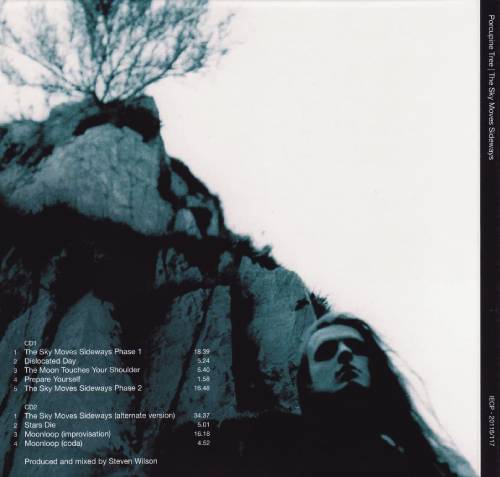
30.5.25
CURVED AIR — Air Cut (1973-1996) Two Version | APE + FLAC (tracks+.cue), lossless
.jpg)
Tracklist :
1. The Purple Speed Queen (1:32)
2. Elfin Boy (4:13)
3. Metamorphosis (10:38)
4. World (3:43)
5. Armin (3:42)
6. U.H.F. (5:07)
7. Two-Three-Two (4:10)
8. Easy (6:40)
Credits :
Kirby Gregory - Guitars, Vocals
Eddie Jobson - Keyboards, Violin, Vocals
Sonja Kristina - Vocals, Acoustic Guitar
Jim Russell - Drums, Percussion
Mike Wedgwood - Bass, Acoustic Guitar, Vocals (Lead Vocal on Two-Three-Two)
+ last month

.jpg)


.jpg)


VERONICA MORTENSEN – Happiness ... Is Not Included (2007) FLAC (tracks+.cue), lossless
Tracklist : 1. Beyond The Rainbow 3:42 Veronica Mortensen 2. Waiting For The Daylight 4:17 Veronica Mortensen 3. Broken B...
