25.9.24

PAUL BLEY TRIO - Closer (1965) Two Version (1993, Serie ESP-Disk New Jazz 名盤 Collection) + (2013, RM | 50th Anniversary Edition) FLAC (tracks+.cue), lossless

The second ESP issue from the Paul Bley Trio is a contrast as dramatic as rain against sunshine. The earlier album, Barrage, recorded in October of 1964, was full of harsh, diffident extrapolations of sound and fury, perhaps because of its sidemen; Marshall Allen and Dewey Johnson on saxophone and trumpet, respectively, were on loan from Sun Ra and joined Eddie Gomez and Milford Graves. Indeed, the music there felt like one long struggle to survive. On this date, recorded over a year later and released in 1966, Bley's sidemen are two more like-minded experimentalists, drummer Barry Altschul and bassist Steve Swallow. The program of tunes here is also more even-handed and characteristically lush: the entire first side and two on the second were written by Carla Bley (including the gorgeous "Ida Lupino") for a total of seven, and there is one each by pianists Annette Peacock and Ornette Coleman. Bley and his trio understand that with compositions of this nature, full of space and an inherent, interior-pointing lyricism, that pace is everything. And while this set clocks in at just over 29 minutes in length, the playing is so genuine and moving that it doesn't need to be any longer. The interplay between these three (long before Swallow switched to electric bass exclusively) is startling in how tightly woven they are melodically and harmonically. There isn't a sense that one player -- other than the volume of Mr. Bley's piano in this crappy mix -- stands out from the other two; they are of a piece traveling down this opaque yet warm road together. Bley may never have been as flashy as Cecil Taylor, but he is every bit the innovator.

-> This comment is posted on Allmusic by Thom Jurek, follower of our blog 'O Púbis da Rosa' <-
Tracklist :
1    Ida    2:58
2    Start    2:07
3    Closer    3:34
4    Sideways In Mexico    2:59
5    Batterie    3:23
6    And Now The Queen    2:18
7    Figfoot    3:29
8    Crossroads    2:34
9    Violin    2:59
10    Cartoon    2:19
Credits :
Bass – Steve Swallow
Percussion – Barry Altschul
Piano – Paul Bley

JAKOB BRO NONET — White Rainbow (2008) FLAC (tracks+.cue), lossless

Tracklist :
1    Indian Folklore    7:00
2    Villanova    11:02
3    Copenhagen Slow Blues    11:37
4    Two Worlds    10:05
5    All's Well That Ends Well    11:03
Credits :
Alto Saxophone – Jesper Zeuthen
Bass – Anders Christensen, Nicolai Munch-Hansen
Bass Clarinet – Andrew D'Angelo
Drums – Jakob Høyer, Kresten Osgood
Electric Piano – Søren Kjærgaard
Guitar – Jakob Bro
Tenor Saxophone – George Garzone

SPONTANEOUS MUSIC ENSEMBLE — Withdrawal 1966-7 (1997) FLAC (tracks+.cue), lossless

Sometimes, unearthed documents can leave you cold, even though the intellect appreciates the historical gap being filled. With Withdrawal, history doesn't matter and the "archival document" ends up superseding the legit material by the Spontaneous Music Ensemble. This is gold -- pure artistic beauty. The year is 1966. John Stevens' group records the soundtrack for a movie (now lost) by George Paul Solomos. The continuous performance is edited into two parts for a total of 30 minutes of music. A slow piece dominated by a glockenspiel leitmotif, "Withdrawal Soundtrack" features beautiful trumpet work by a Kenny Wheeler who was just beginning to play free music. Other players are Stevens (drums), Paul Rutherford (trombone), Trevor Watts (saxophone, oboe), Barry Guy (bass, limited to sustained drones), and a very young and discreet Evan Parker (saxophone). A few months later, in early 1967, the same lineup, plus Derek Bailey on amplified guitar, recorded a reworked version of the soundtrack in three sequences, plus a suite called "Seeing Sounds & Hearing Colours," both intended for an LP release that never materialized. Watts plays some beautiful flute on "Withdrawal Sequence 2." Actually, the whole CD contains fantastic free music, almost completely detached from jazz -- very atmospheric, delicate, and highly organic with a strong sense of discovery. These are the earliest available recordings by Barry Guy and Evan Parker (even though the latter doesn't play much), and one of Bailey's earliest sessions playing free music (even though he is buried in the mix). Historical significance notwithstanding, Withdrawal is simply a great album, still very relevant and "new" today. François Couture    Tracklist :
Credits :
Double Bass, Piano – Barry Guy
Drums, Cymbal [Cymbals], Percussion, Composed By – John Stevens
Guitar [Amplified] – Derek Bailey (tracks: 5 to 11)
Oboe, Alto Saxophone, Flute, Voice, Percussion – Trevor Watts
Soprano Saxophone, Tenor Saxophone, Percussion – Evan Parker
Trombone, Percussion – Paul Rutherford
Trumpet, Flugelhorn, Percussion – Kenny Wheeler

24.9.24

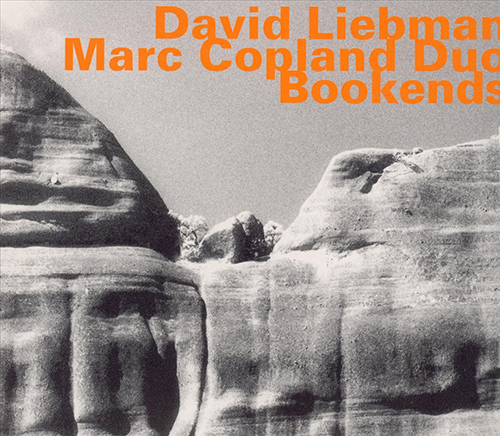
DAVID LIEBMAN | MARC COPLAND — Bookends (2002) 2CD | FLAC (tracks+.cue), lossless

The title of this CD might imply that saxophonist Dave Liebman and pianist Marc Copland signify two jazz musicians who share similar visions and musical aspirations. The adage that like minds think along parallel paths serves as an underlying condition for the artists' third collaboration for the Switzerland-based hatOLOGY record label. This time, the instrumentalists work as a duo, performing a few originals amid modern jazz standards. They wittily reconfigure Herbie Hancock's classic "Maiden Voyage," where the duo unassumingly sneaks the primary theme into the grand scheme of things. With this two-CD set, the musicians glide through a sequence of meticulously enacted improvisations amid a delightful and generally probing rendition of Miles Davis' "Blue in Green," among other familiar works. Nonetheless, the artists' synergy seemingly sparks creativity here. Some of these pieces are marked by freely organized tradeoffs, to coincide with wistful melodies and bluesy dreamscapes. Sure, they turn up the heat on occasion, yet it is all about intuitive responses, delicately enacted frameworks, and memorable melodies, as they tend to collapse the history of modern jazz into a uniformly arranged production that most assuredly emanates from the heart. Strongly recommended. Glenn Astarita   Tracklist :
Credits :
Piano – Marc Copland
Soprano Saxophone, Tenor Saxophone – David Liebman

LOUIS MOHOLO-MOHOLO DUETS WITH MARILYN CRISPELL — Sibanye (We Are One) (2008) FLAC (tracks+.cue) lossless

Sibanye/We Are One is the title of an album recorded at An die Musik Live in Baltimore, Maryland on June 30, 2007. Released the following year on the Intakt label, it was warmly received and has been critically acclaimed ever since. For their first-ever collaborative engagement, the Marilyn Crispell/Louis Moholo-Moholo duo chose a 100-percent improvisational approach, rooted within each individual's life-long commitment to the art and discipline of shared creative exploration. Moholo, a South African drummer who first gained international fame for his work with Johnny Dyani and Dudu Pukwana, was perfectly suited for interaction with Crispell, a Philadelphia-born pianist who is admired and respected as one of the most astute and highly evolved creative musicians of her generation. Precedents for the sounds that resulted from her historic meeting with Moholo may be found among her duets with Gerry Hemingway and her periodic pairings with Anthony Braxton. Anyone who has witnessed her live one-on-one interaction with another artist will recall how she maintains friendly and highly focused eye contact. Photographic evidence suggests this tendency as one explanation for the subtlety and sensitivity that characterized her mutually respectful communion with Louis Moholo-Moholo on that summer day in Baltimore. arwulf arwulf
Tracklist :
1    Improvise, Don't Compromise    12:40
2    Moment Of Truth    7:08
3    Journey    11:49
4    Soze (Never)    6:28
5    Phendula (Reply)    7:07
6    Reflect    7:21
7    Sibanye (We Are One)    6:18
Credits :
Drums – Louis Moholo-Moholo
Piano – Marilyn Crispell

JEFF BECK — Wired (1976-2013) RM | Blu-spec CD2 | Serie Legacy Recordings | Two Version | FLAC (image+.tracks+.cue), lossless

Released in 1976, Jeff Beck's Wired contains some of the best jazz-rock fusion of the period. Wired is generally more muscular, albeit l...