 More than a decade into their career, Medeski, Martin & Wood continue to expand their sound. This time out, they've enlisted John King (Dust Brothers, Beck, Beastie Boys) as producer and engineer, and he brings a left-field pop sensibility to the table without ever sacrificing the personality and energy of the band. OK, it's not really "pop," but the songs themselves are less overtly "out" than the last couple records despite some wicked, nasty, wonderful tones. The new sound is a thick one, with lots of different layers and perhaps the largest keyboard arsenal ever assembled. On the first track alone, "Anonymous Skulls," you can hear just about every keyboard sound known to man, but it never gets too busy or claustrophobic. In fact, it's almost like the overdubbing process made them more aware of the tunes themselves rather than just the playing, making the songs particularly focused. It's easy to tell this is MMW, with Chris Wood's rich basslines, John Medeski's often percussive virtuosity, and Billy Martin's easily identifiable beats, but all the different layers and bits of ear-candy details really add a new element to the sound. There's also the fairly prominent use of Mellotron, which adds great texture, especially in the sometimes abusive hands of Medeski, who really demonstrates knowledge and mastery of every different keyboard and keyboard style. Forsaking the plethora of guest stars of the last two albums, the only guests are Marc Ribot (on four tracks) with the Sex Mob horns (Steven Bernstein and Briggan Krauss) joining on one of those. Ribot plays with perhaps his thickest, most distorted tone on record on "New Planet," and really lets it rip on "Queen Bee." End of the World Party (Just in Case) is probably the most intricately assembled of the MMW records, but the grooves are still unshakable and the bottom line is that they're still a great band. The fact that they continue to push their sound, even enlisting an almost mainstream "rock" producer to spice things up, is almost a victory in itself in the generally too-safe world of jazz, but the real success is that they keep putting out great records. This is no exception. by Sean Westergaard
Tracklist :
1 Anonymous Skulls 4:23
John King / Billy Martin / John Medeski / Chris Wood
2 End Of The World Party 5:10
John King / Billy Martin / John Medeski / Chris Wood
3 Reflector 4:09
John King / Billy Martin / John Medeski / Chris Wood
Guitar – Marc Ribot
4 Bloody Oil 4:41
John King / Billy Martin / John Medeski / Chris Wood
5 New Planet 4:05
John King / Billy Martin / John Medeski / Chris Wood
Guitar – Marc Ribot
6 Mami Gato 4:07
John King / Billy Martin / John Medeski / Chris Wood
7 Shine It 4:57
John King / Billy Martin / John Medeski / Chris Wood
8 Curtis 4:37
John King / Billy Martin / John Medeski / Chris Wood
9 Ice 4:32
John King / Billy Martin / John Medeski / Chris Wood
10 Sasa 4:13
John King / Billy Martin / John Medeski / Chris Wood
Guitar – Marc Ribot
Saxophone – Briggan Krauss
Trumpet [Slide Trumpet] – Steven Bernstein
11 Midnight Poppies / Crooked Birds 3:45
John King / Billy Martin / John Medeski / Chris Wood
12 Queen Bee 4:57
John King / Billy Martin / John Medeski / Chris Wood
Guitar – Marc Ribot
Credits :
Bass – Chris Wood
Drums, Percussion – Billy Martin
Keyboards – John Medeski
Producer – John King
10.11.21
MEDESKI, MARTIN & WOOD - End of the World Party (Just in Case) (2004) FLAC (tracks+.cue), lossless


MEDESKI, SCOFIELD, MARTIN & WOOD - Out Louder (2006) 2CD / FLAC (tracks+.cue), lossless
 Out Louder reunites keyboardist John Medeski, drummer Billy Martin, and bassist Chris Wood with guitar great John Scofield, who employed the trio on his 1997 A Go Go album. That record opened the creativity gates for both the trio and Scofield, who fed off and goaded each other into territories neither party had previously gone separately. Out Louder isn't so much a rematch as an upgrade. Both Scofield and MMW have continued to explore in the near-decade since A Go Go, and they come to this project with a greater understanding of their collective abilities as well as a willingness to explore the possibilities further. Not unexpectedly, the four musicians work hard here, but they also have a ton of fun. The opening track, "Little Walter Rides Again," serves notice that this isn't going to be an exercise in showing off but rather four envelope-pushing musicians picking each other's brains and seeing what they find. An easygoing blues vamp with a funky, Memphis-style beat, the track keeps the quartet reined in while simultaneously allowing each musician to dance around a bit within its structure. That idea of holding back doesn't last long, however, as that leadoff gives way to "Miles Behind," a nod to electric Miles Davis minus the trumpet. Although the players, particularly Medeski and Scofield, take several opportunities to reach for the outside fringes, Out Louder never becomes inaccessible, even during its freer-jazz moments. "Tequila and Chocolate," for example, takes up with a simple bossa nova rhythm that eventually goes wildly astray without losing touch with its form, and the John Lennon tune "Julia" (which, honestly, borrows only minimally from the original melody) is a soft, sweet, and sensual ballad that never strays even close to the edge yet still manages to feel edgy. That's not to say that those looking for the heavy jams will be disappointed. "What Now" finds Medeski and Scofield challenging each other as if they were Keith Emerson and Jimi Hendrix having it out at some late-night club, and "Down the Tube," though essentially a simple funky blues, flirts with psychedelia, Scofield turning in some of his most startling playing of the set. The session ends with a virtually unrecognizable improv on Peter Tosh's reggae anthem "Legalize It" that spotlights Martin and Wood in lockstep groove. If ever MMW and Scofield decided to make something more permanent of their meet-ups, one can only guess where else they might go. by Jeff Tamarkin
Tracklist 1 :
1 Little Walter Rides Again 3:55
John Scofield
2 Miles Behind 2:53
Billy Martin / John Medeski / John Scofield
3 In Case The World Changes Its Mind 3:41
Billy Martin / John Medeski / John Scofield
4 Tequila And Chocolate 6:25
Billy Martin / John Medeski / John Scofield / Chris Wood
5 Tootie Ma Is A Big Fine Thing 4:42
Public Domain
6 Chachaça 4:14
Chris Wood
7 Hanuman 6:24
Billy Martin / John Medeski / John Scofield
8 Telegraph 3:55
Billy Martin / John Medeski / John Scofield
9 What Now 4:54
Billy Martin / John Medeski / John Scofield
10 Julia 5:18
John Lennon / Paul McCartney
11 Down The Tube 11:40
Billy Martin / John Medeski / John Scofield
12 Legalize It 3:55
Written-By – Peter Tosh
Tracklist 2 :
1 A Go Go - Live 5:17
2 Cachaca - Live 7:29
3 The Tube - Live 4:19
4 Amazing Grace - Live 6:05
5 Deadzy - Live 6:50
6 What Now - Live 4:19
Credits :
Bass – Chris Wood
Drums, Percussion – Billy Martin
Guitar – John Scofield
Keyboards – John Medeski
MEDESKI, MARTIN & WOOD - Let's Go Everywhere (2008) FLAC (image+.cue), lossless
 Medeski, Martin & Wood have always considered their music as being for the kid in all of us, no matter our age. For Let's Go Everywhere, they really emphasize the childlike approach to music-making, staying fun and funky while adapting various tunes of adolescence and inventing a few silly songs of their own. With help from grown-up vocalists and selected children, MMW take liberties in their musical image by relating to the playful, nonchalant, and carefree innocence of youth. The title track is a great example of being a rascal without devilish or campy affectations, as singer Tim Ingham modifies and extends the lyrics to the famous Johnny Cash tune "I've Been Everywhere," replete with handclapping. The scrubbing song "Pirates Don't Take Baths" is hilarious, in a shuffle with Ingham and Medeski's piano; "On an Airplane" goofs it up more as Chris Wood sings or plays harmonica; while "The Train Song" gains speed in a sly New Orleans-tinged tango, with Oliver Wood's bluesy vocalizing. Dr. John would likely be amused by "Let's Go" in an old-style Crescent City groove; there's a 6/8 Latin version of "Hickory Dickory Dock" with spoken lyrics by Lindsay Dyer alongside only Billy Martin's drumming; and "Pat a Cake" is a kid's rap with Martin pounding out the funk. Few instrumentals crop up, but "Cat Creeps" provides Medeski with an opportunity to use at least three keyboards -- one a Farfisa organ -- in choogling stairstep motion, but for "Far East Sweets" (for Haribo candies?) the sound is koto-like, Asian-derived and mysterious. Perhaps "Where's the Music," with its tacit sections waiting for the children to yell out the title refrain, speaks out the best not only on the attitude of how youth music is invisible, but also on where the core of MMW's organ funk music lies. Although not attempting to be Sharon, Lois & Bram, Raffi, or (thankfully) Barney, Medeski, Martin & Wood have struck a chord with their inner child, while presenting music that any growing toddler, tween, or teen can relate to. by Michael G. Nastos
Tracklist :
1 Waking Up 1:07
John Medeski
2 Let's Go Everywhere 3:35
M.A. Geoffrey
3 Cat Creeps 2:49
Billy Martin
4 The Train Song 2:16
Vocals, Written-By – Chris Wood
5 Where's the Music 1:04
Chris Wood
6 Pat a Cake 3:16
Arranged By – Billy Martin
Written-By – Traditional
7 Pirates Don't Take Baths 1:12
Written-By – Tim Ingham
8 Far East Sweets 2:43
Chris Wood
9 On an Airplane 2:56
Vocals, Written-By – Chris Wood
10 The Squalb 3:55
John Lurie / John Medeski
11 Let's Go 3:19
John Medeski
12 Old Paint 2:29
Traditional
13 Hickory Dickory Dock 2:41
Traditional
14 All Around the Kitchen 1:26
Traditional
15 We're All Connected 1:04
John Medeski
Credits :
Bass, Guitar, Harmonica – Chris Wood
Choir – Lindgren Blue Room Class (faixas: 11, 14)
Drums, Percussion, Other [Mbira] – Billy Martin
Illustration – Jim Stoten
Keyboards – John Medeski
Vocals – Caelan Cardello (faixas: 5), Dakota Martin (faixas: 5, 6, 15), Emily Kingsley (faixas: 2, 6), Georgia Laugher (faixas: 5, 6), Kieran Engel (faixas: 4), Lindsay Dyer (faixas: 13, 15), Marvin Pontiac (faixas: 10), Melissa Schacker (faixas: 2), Molly Densmore (faixas: 2), Nissa Wood (faixas: 5, 14), Oliver Wood (faixas: 4), Sawyer Martin (faixas: 5), Tim "Big Time" Ingham* (faixas: 2, 7), Tulsi Anna (faixas: 14) 
9.11.21
DAVE HOLLAND QUARTET - Conference of the Birds (1973-2000) FLAC (tracks+.cue), lossless
 Dave Holland's debut as a leader, Conference of the Birds, doesn't seem to get its proper due outside of avant-garde circles; perhaps, when discussing the greats, Holland's name simply doesn't spring to mind as immediately. Whatever the case, Conference of the Birds is one of the all-time avant-garde jazz classics, incorporating a wide spectrum of '60s innovations. Part of the reason it works so well is the one-time-only team-up of two avant-garde legends: the fiery, passionate Sam Rivers and the cerebral Anthony Braxton; they complement and contrast one another in energizing fashion throughout. But much credit is due to Holland; make no mistake, even though he throws the spotlight to Rivers and Braxton, this is his date. The repertoire consists entirely of Holland originals, and his work here established him as easily the most advanced bassist/composer since Charles Mingus. His compositions show an impressive range: twisting, unpredictable themes accompanied by storming solos (the classic "Four Winds," "Interception"); free improvisation in group-dialogue form ("Q&A"); inside/outside avant-bop ("See Saw"); and surprisingly lovely, meditative flute showcases (the classic title track, "Now Here (Nowhere)"). No matter how free things get, Holland's pieces always set up logical frameworks with a clear-minded focus, which makes it easier to get a handle on the advanced musicianship of Holland's quartet (which also includes drummer Barry Altschul, who played in Chick Corea's Circle with Braxton and Holland). The absence of a piano frees up Rivers and Braxton to play off of one another, but the task of driving the ensemble then falls to Holland, and his prominent, muscular lines manage to really push his front line all by themselves. This album is a basic requirement for any avant-garde jazz collection, and it's also one of the most varied and accessible introductions to the style one could hope for. by Steve Huey
Tracklist :
1 Four Winds 6:32
David Holland
2 Q & A 8:34
David Holland
3 Conference Of The Birds 4:43
David Holland
4 Interception 8:20
David Holland
5 Now Here (Nowhere) 4:32
David Holland
6 See-Saw 6:40
David Holland
Credits :
Bass – Dave Holland
Percussion, Marimba – Barry Altschul
Producer – Manfred Eicher
Reeds, Flute – Anthony Braxton, Sam Rivers
DAVE HOLLAND — Emerald Tears (1977-1996) Two Version | APE + FLAC (image+.tracks+.cue), lossless
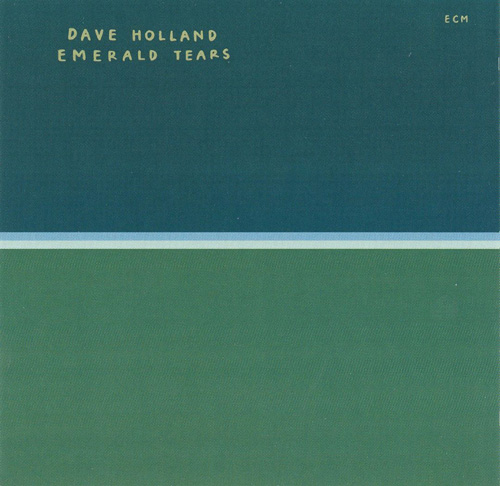
Emerald Tears is a very nice showcase of Dave Holland, and is almost certain to be enjoyed by fans of the upright bass. The solo recording features less bowing and more plucking, and focuses on six originals, a Braxton tune, and Miles Davis' "Solar." Joslyn Layne
Tracklist :
1. Spheres 5:58
Dave Holland
2. Emerald Tears 6:31
Dave Holland
3. Combination 5:18
Dave Holland
4. B-40/RS-4-W/M23-6K 5:15
Anthony Braxton
5. Under Redwoods 6:38
Dave Holland
6. Solar 6:17
Miles Davis
7. Flurries 4:34
Dave Holland
8. Hooveling 4:04
Dave Holland
Credits
Double Bass – Dave Holland
+ last month


JEFF BECK — Wired (1976-2013) RM | Blu-spec CD2 | Serie Legacy Recordings | Two Version | FLAC (image+.tracks+.cue), lossless
Released in 1976, Jeff Beck's Wired contains some of the best jazz-rock fusion of the period. Wired is generally more muscular, albeit l...
