.jpg) By 1972, Tommy Bolin had left Zephyr and was yet to join the James Gang. He had formed a band christened, aptly enough, Energy, but they broke up before releasing any recordings. Yet, time in the studio was spent, resulting in this collection of songs released 27 years after their recording. Some of the songs would be redone with the James Gang ("Red Skies," "Got No Time for Trouble") or solo ("Dreamer") in the next few years, while "Naked Edge" comes from the soundtrack to a mountain-climbing film called Break on Through, but most of the contents of the album see their first release here. The album is mixed: "Heartlight" and "Miss Christmas" are fairly generic hard rock, while "Hok-O-Hey" and "Eyes of Blue" have a very Allman Brothers sound/feel, yet all are elevated by Bolin's guitar playing. The neo-psychedelic "Limits," sung by keyboardist Tom Stephenson, is unlike most of Bolin's other work and the extended instrumental "Naked Edge" furthers this psychedelic jamming. "Sky Sail" is a cinematic piano/guitar duet and is a perfect album closer. In the end, the album works more as a compilation of Energy's various styles than as a cohesive album. Rob Caldwell
By 1972, Tommy Bolin had left Zephyr and was yet to join the James Gang. He had formed a band christened, aptly enough, Energy, but they broke up before releasing any recordings. Yet, time in the studio was spent, resulting in this collection of songs released 27 years after their recording. Some of the songs would be redone with the James Gang ("Red Skies," "Got No Time for Trouble") or solo ("Dreamer") in the next few years, while "Naked Edge" comes from the soundtrack to a mountain-climbing film called Break on Through, but most of the contents of the album see their first release here. The album is mixed: "Heartlight" and "Miss Christmas" are fairly generic hard rock, while "Hok-O-Hey" and "Eyes of Blue" have a very Allman Brothers sound/feel, yet all are elevated by Bolin's guitar playing. The neo-psychedelic "Limits," sung by keyboardist Tom Stephenson, is unlike most of Bolin's other work and the extended instrumental "Naked Edge" furthers this psychedelic jamming. "Sky Sail" is a cinematic piano/guitar duet and is a perfect album closer. In the end, the album works more as a compilation of Energy's various styles than as a cohesive album. Rob Caldwell
Tracklist :
1. Red Skies 8:19
Tommy Bolin
Vocals – Gary Wilson
2. Heartlight 4:23
Tommy Bolin / John Tesar
3. Hok-O-Hey 7:16
Tommy Bolin
4. Got No Time For Trouble 5:01
Tommy Bolin / John Tesar
5. Limits 4:52
Tommy Bolin / John Tesar
Keyboards, Vocals – Tom Stephenson
6. Eyes Of Blue 2:59
Tommy Bolin
7 . Dreamer 5:08
Jeff Cook
8. Miss Christmas 4:18
Tommy Bolin / Jeff Cook
9. Naked Edge 14:16
Tommy Bolin
10. Sky Sail 5:28
Tommy Bolin
Credits :
Bass – Stanley Sheldon
Drums – Bobby Berge
Guitar, Producer – Tommy Bolin
Vocals, Harmonica – Jeff Cook
3.6.25
TOMMY BOLIN — Energy (1972-1999) RM | FLAC (tracks+.cue), lossless


JEAN-LUC PONTY — Le Voyage : The Jean-Luc Ponty Anthology (1996) 2CD | Two Version | FLAC (image+.tracks+.cue), lossless
 Ponty has worked with Frank Zappa and John McLaughlin, has provided brilliant violin work as a session player, and has had a terrific run as a bandleader. This two-disc set dips into Ponty's Atlantic Records releases, tracing the development of Ponty's particular brand of jazz fusion and providing a very nice look at his career as a bandleader. A few of the cuts seem a bit watery and thin, but this has more to do with the original recording and mixing than the performances or mastering -- Rhino's mastering department has provided the usual quality of production here. Jean-Luc Ponty is a notable performer in the jazz arena, one who has a clear vision and strong ideals when it comes to his music -- he likes to test his boundaries and explore new possibilities. A notable collection. Steven McDonald
Tracklist 1 :
1. "Question with No Answer" – 3:29
2. "Bowing-Bowing" – 4:53
3. "Echoes of the Future" – 3:11
4. "Aurora, Pt. 2" – 6:15
5. "Waking Dream" – 2:26
6. "Renaissance" – 5:48
7. "New Country" – 3:09
8. "Enigmatic Ocean, Pt. 2" – 3:37
9. "Enigmatic Ocean, Pt. 3" – 3:43
10. "Mirage" – 4:54
11. "Egocentric Molecules" – 5:49
12. "Cosmic Messenger" – 4:41
13. "Ethereal Mood" – 4:04
14. "I Only Feel Good with You" – 3:17
15. "No Strings Attached" (live) – 6:02
Tracklist 2 :
1. "Stay with Me" – 5:36
2. "A Taste for Passion" – 5:25
3. "Once a Blue Planet" – 4:05
4. "Forms of Life" – 4:49
5. "Rhythms of Hope" – 4:03
6. "Mystical Adventures, Pt. 4" – 0:47
7. "Mystical Adventures, Pt. 5" – 5:06
8. "Jig" – 3:58
9. "Final Truth, Pt. 1" – 4:55
10. "Computer Incantations for World Peace" – 5:41
11. "Individual Choice" – 4:57
12. "Nostalgia" – 5:03
13. "Eulogy to Oscar Romero" – 2:34
14. "Infinite Pursuit" – 5:59
15. "In the Kingdom of Peace" – 4:04
16. "Caracas" – 3:51
17. "Forever Together" – 5:46
All songs by Jean-Luc Ponty.
Personnel :
Jean-Luc Ponty - Autoharp, Violin, Electric Piano, Organ, Synthesizer, Bass Synthesizer, Keyboard Bass, Electronic Percussion
Joaquin Lievano, Peter Maunu - Guitar, Guitar Synthesizer
Daryl Stuermer, Dan Sawyer, Martin Atangana, Allan Holdsworth, Scott Henderson , Jamie Glaser - Guitar
Allan Zavod - Piano, Clavinet, Organ, Keyboards, Synthesizer
Patrice Rushen - Piano, Clavinet, Organ, Synthesizer
Chris Rhyne - Piano, Keyboards, Synthesizer, Bass Synthesizer
Wally Minko - Piano, Keyboards
Mokhtar Samba - Drums, Cowbells, Timbales
Norman Fearrington, Ndugu, Ray Griffin - Drums, Percussion
Mark Craney - Drums
Abdou M'Boup - Cowbells, Shaker
Paulinho Da Costa - Percussion
SHPONGLE — Tales Of The Inexpressible (2001) Two Version | FLAC (image+.tracks+.cue), lossless

With Tales of the Inexpressible, Simon Posford and Raja Ram widened their Eastern-influenced ambient sound to incorporate stronger samples and a wry, complex production psychology. The effect was a lot like the Orb's "Earth (Gaia)" or the work of Future Sound of London recorded with Cydonia's Aki Omori, encouraging dub and cartoon effects to make nests inside a slick environmental vibe. Highlight "A New Way to Say 'Hooray!'" was complicated downtempo without resorting to jazz, and Raja Ram's flute work was everywhere, liquid-like and frequently impressive. Dean Carlson
Tracklist :
1. Dorset Perception 8:12
Raja Ram
Vocals – Michele Adamson
2. Star Shpongled Banner 8:23
Raja Ram
3. A New Way To Say "Hooray!" 8:32
Raja Ram
4. Room 23c 5:04
Raja Ram
5. My Head Feels Like A Frisbee 8>52
Raja Ram
6. Shpongleyes 8:56
Raja Ram
7. Once Upon The Sea Of Blissful Awareness 7:30
Raja Ram
Backing Vocals – Michele Adamson
Vocals – Abigail Gorton (Hari Om)
8. Around The World In A Tea Daze 11:21
Raja Ram
Vocals – Abigail Gorton (Hari Om)
9. Flute Fruit 2:08
Raja Ram
Credits :
Acoustic Guitar [Various Acoustic Guitars] – Pete Callard
Artwork [Original Shpongle Mask] – Sat Ram Bradley
Artwork [Watercolours], Illustration – Raja Ram
Cello, Acoustic Bass [Fake] – Harry Escot
Written-By, Producer, Flute [Silver], Vocals [Vocal Utterances] – Raja Ram
Written-By, Producer, Programmed By, Guitar, Synthesizer, Acoustic Bass [Semi-Acoustic] – Simon Posford 
AKTUALA — Tappeto Volante (1976-2013) Two Version | FLAC (image+.tracks+.cue), lossless
 A quintet formed in Milan in 1973 by husband and wife Walter and Laura Maioli, Daniele Cavallanti, Antonio Cerantola, and Lino Vaccina, Aktuala (the Esperanto word for "actually") are justly ranked among the pioneers of modern world music. They're a furiously eclectic band whose progressive rock tendencies are built around Arabian, African, and Indian themes, and their instrumentals are built on trance-inducing repetition. Cavallanti was simultaneously involved in Rome-based pianist Patrizia Scascitelli's eponymous quartet.
A self-titled debut album in 1973 brought the band some European recognition, and the following year saw the lineup enlarged by the arrival of flutist Otto Corrado, guitarist Attilio Zanchi, harpist Marjon Klok, and percussionist Trilok Gurtu -- each a master of another ethnic instrument. Released in 1974, La Terra, the group's second album, is widely regarded as their masterpiece; their most ambitious project, however, was still to come. Aktuala spent much of 1975 traveling, piecing together what would become their third album in a variety of exotic locations, each of which would flavor one or more of the tracks. With Fabrizio Cassanoi's sitar and Rocchi's keyboards adding fresh textures to the brew, Tappeto Volante was released in 1976. Very well-received, and certainly an unspoken influence on a number of later European acts, Tappeto Volante was nevertheless Aktuala's final offering. The band split later that same year. Cavallanti resurfaced with Nexus, and Walter Maioli is recognized among Italy's foremost experts in prehistoric music-making. Dave Thompson
Tracklist :
1. Churinga (0:54)
2. Ugula Baliuè Arfican Planet (5:29)
3. Ohnedaruth (Dedicato a J.Coltrane) (3:38)
4. Il Ritmo del Cammello (3:10)
5. Hare (2:31)
6. Mr. Trilok (2:44)
7. Chitarra e Piffero (3:03)
8. Echo Raga (3:16)
9. Mediterraneo (2:23)
10. Flash (3:44)
11. Waruna (7:43)
12. Aksak (Zoppo) (2:43)
13. Nettuno Dio del Mare (1:27)
14. Il Sussurro dell’Anima (Bonus Track) (05:03)
Credits :
Bass – Roberto Del Piano (tracks: 9)
Drums – Filippo Monico (tracks: 9)
Guitar – Antonio Cerantola (tracks: 2, 3, 6, 7, 9, 11, 12)
Harp, Tambora [Tamboura], Tambourine – Marjon Klok (tracks: 2, 3, 6, 9, 11, 12)
Kalimba [Zanza], Tambora [Tamboura], Bells – Kela Rangoni Machiavelli (tracks: 2, 3, 6, 9, 11, 12)
Keyboards – Claudio Rocchi (tracks: 8)
Music By – Aktuala, Fabrizio Cassano (tracks: 5)
Ney, Harmonica, Whistle, Flute, Bagpipes, Percussion [Churinga] – Walter Maioli (tracks: 2, 4, 6 to 9,11 to 13)
Percussion – Roberto Meazza (tracks: 4)
Recorded By – Andrea Tamassia (tracks: 2, 3, 6, 9, 11, 12), Francesco Cavalli Sforza (tracks: 10)
Sitar – Fabrizio Cassano (tracks: 5)
Tabla [Darbouka], Dholak, Soprano Saxophone – Daniele Cavallanti (tracks: 4, 5, 8, 10)
Tabla, Drums [Snake Drums], Wood Block, Cymbal – Trilok Gurtu (tracks: 2, 3, 6, 9, 11, 12)
ATOLL — Musiciens - Magiciens (1974) RM | Two Version | WV + FLAC (image+.tracks+.cue), lossless
.jpg)
French progressive rock group Atoll fashioned their music around Yes' and Genesis' repertoire, employing lush tapestries of classically oriented string work to light melodies and intricate song structures. 1974's Musiciens-Magiciens is among the band's strongest releases, laying out breezy, energetic passages that use a moderate amount of keyboards and strong dosages of guitar to create busy semi-suites that hold together quite well. All the vocals are in French, but the instruments are what truly steal the show, especially in the 11-plus minutes of "Le Baladin du Temps," a concept piece which is broken up into three separate parts. The final track, entitled "Je Suis D'ailleurs," has the band creating some rather spirited musical drifts and variations through the use of animated rhythms and resilient textures, much like Ange does, another French progressive band. While Atoll's composition rarely strayed throughout their short lifespan, Musiciens-Magiciens remains one their best albums, mainly because the group was just starting out and their music and images sound fresh and inventive. The release of Musiciens-Magiciens that appears on Musea contains four live bonus tracks, with two of them repeats of the album's original cuts. Purists should be aware that the recording of the live tracks is very poor and of the lowest quality, but the original seven cuts sound quite good. Mike DeGagne
Tracklist :
1. L'Hymne Medieval 3:13
2. Le Baladin Du Temps (11:08)
2a L'arpège Philosophal
2b L'incube
2c L'arpège Philosophal
3. Musiciens-Magiciens 3:43
4. Au-Dela Des Ecrans De Cristal 5:28
5. Le Secret Du Mage 2:56
6. Le Berger 3:48
7. Je Suis D'Ailleurs 7:58
– BONUS TRACKS –
8. Au-Dela Des Ecrans De Cristal (Live, Bonus track)
9. Fille De Neige (Live, Bonus track)
10. Je Fais Un Reve (Live, Bonus track)
11. Musiciens-Magiciens (Live, Bonus track)
Credits :
André Balzer - Lead Vocals, Drums
Chris Béya - Guitar
Michel Taillet - Keyboards, Drums
Jean-Luc Thillot - Bass
Alain Gozzo - Drums
+
- Lisa Deluxe, Stella Vander - backing vocals
2.6.25
FAUST — Faust (1971-2003) RM | Rock Legend Series | Two Version | WV + FLAC (image+.tracks+.cue), lossless

The impact of Faust cannot be overstated; their debut album was truly a
revolutionary step forward in the progress of "rock music". It was
pressed on clear vinyl, packaged in a clear sleeve, with a clear plastic  lyric insert. The black X-ray of a fist on the cover graphically
illustrates the hard core music contained in the grooves, an
amalgamation of electronics, rock, tape edits, acoustic guitars, musique
concrete, and industrial angst. The level of imagination is staggering,
the concept is totally unique and it's fun
lyric insert. The black X-ray of a fist on the cover graphically
illustrates the hard core music contained in the grooves, an
amalgamation of electronics, rock, tape edits, acoustic guitars, musique
concrete, and industrial angst. The level of imagination is staggering,
the concept is totally unique and it's fun
to listen to as well. Archie Patterson
Tracklist :
1. Why Don't You Eat Carrots 9:35
Faust
2. Meadow Meal 8:05
Faust / Rudolf Sossna
3. Miss Fortune 16:36
Faust
Credits :
Performer – Arnulf Meifert, Gunther Wüsthoff, Joachim Irmler, Jean-Hervé Peron, Rudolf Sosna, Werner Diermaier
CARPE DIEM — En Regardant Passer le Temps (1978-2017) RM | SHM-CD | Mini LP | Two Version | FLAC (image+.tracks+.cue), lossless

This album has really grown on me big time. This has got to be one of the greatest prog albums I have bought in a long time. This group, as far as French prog bands are concerned gets mentioned up there with the likes of PULSAR, ATOLL, MAGMA, ANGE, etc. and without good reason. The band consisted of keyboardist/vocalist Christian Truchi, guitarist Gilbert Abbenanti, bassist Alain Berge, drummer Alain Faraut, and saxist/flutist Claude-Marius David (who unfortunately died in 1993, according to the booklet included in the Musea CD reissue, but unfortunately no mention of cause of death).
"En Regardant Passer Le Temps" is the first of only two albums and is generally regarded as the better of the two. This is one of the very few prog rock albums I've found where I can't find any flaws. Many times I have problems with bad production, bad vocals (or a band singing in poor English if they're from a non-English speaking country), an album getting hampered by a sappy ballad or two, awful synth sound, poor lyrics, or whatever, but none of that's to be found here. Christian Truchi decides to sing in his native French, and he has one of the more pleasant voices in French prog (a refreshing change, when you're accustomed to harsh French vocals, like that of ANGE).
The band has one of the more unique keyboard sounds I've heard, rather than the usual Hammond organ, Mini Moog, and Mellotron, Truchi used a Farfisa electric piano, an unidentifiable synth, and a string synth. So many times you see this band compared with GONG, or CAMEL, or SOFT MACHINE. Don't buy in to that at all, this has got to be one of the more original mid '70s prog albums. For one thing, the music is way more sophisticated than what GONG did. There are plenty of jazzy passages because of the presence of sax, but plenty of spacy symphonic passages. The band is often placed under the "space fusion" category with the likes of GONG and even OZRIC TENTACLES, which is a bit strange, given CARPE DIEM was quite a bit more sophisticated. Expect more of a symphonic space prog album.
The album consists of only four cuts, but all are of the same quality, so it's really difficult picking out the best cut. Plus you can't beat the cover, which is very much in the style of M.C. Escher (done by Hubert Pattieu). Truly an essential album, as far as I'm concerned. progarchives 
1 Voyage Du Non-Retour 3:45
2 Réincarnation 12:50
3 Jeux Du Siècle 9:00
4 Publiphobie 10:50
Credits :
Bass – Alain Berge
Drums, Percussion – Alain Faraut
Guitar – Gilbert Abbenanti
Keyboards, Vocals – Christian Truchi
Soprano Saxophone, Flute, Percussion – Claude M. David

1.6.25
NEUSCHWANSTEIN — Alice In Wonderland (1976-2022) RM | FLAC (tracks+.cue), lossless
 A few years before Neuschwanstein conceived their masterpiece "Battlement" (to many, including myself, one of the best symphonic prog albums ever from Germany), the band had already written an album-worthy set of tracks that, together, made the concept of a progressive opus inspired by Lewis Carroll's "Alice in Wonderland". I suspect that this was done when the band was still a 5-piece (before the arrival of Frederic Joos), but you can tell that by then the fivesome had found out their own voice within the realms of symphonic prog rock. There aren't too many lyrics in "Alice in Wonderland", and most of them are narrated. The opener is literally an intro that comprises brief atmospheres based on floating piano washes and eerie cymbals, until the instrumentation settles in for 'The Gate to Wonderland', lyrically structured across a prominent presence of bucolic ambiences provided by the playful flute lines and the elegant interventions on synth (orchestration and solo). All in all, it is mostly a second intro, and a "third intro" arrives with the slightly more mysterious 'Pond of Tears', which is where the synth layers become more relevant, and also there is a more noticeable presence of the guitar phrases alongside the ever haunting flute lines. The melodic display is definitely more ambitious than on the preceding track, but it still feels like a sequence of amalgamated snippets than a track with a power of its own. Track 4 is the first piece in this concept that benefits from a proper development - it starts very lyrical, like a symphonic journey with heavily pastoral accents, but soon the piece reveals a colorful imagery of sound that alternates density and lightheartedness in an ultimately symphonic fashion. Influences from Camel, Novalis, Eloy and Focus' introspective side are (or seem to be) very transparent here, with some touches of early 70s Jethro Tull. Regarding the sense of magic delivered through the global instrumentation, you can also tell that there are also coincidences with what Happy the Man were doing at the time on the other side of the Atlantic for their "Death's Crown" project - it is no wonder, since this album's tracklist and that HTM project were both conceived as musical bases for visuals and theatrical deliveries. 'Five O'Clock-Tea' is segued to the last notes of the preceding track's enthusiastic closing portion, bringing back a ceremonious note that works really well due to the clever architecture that ordains the various moods and motifs. This is the sort of grandeur that I wished earlier for tracks 2 and 3 - at this point, the musical ideas are becoming gradually more robust. After a brief sung section, the track shifts toward a sense of sheer, dramatic intensity without losing its melodic drive. The last section is a joyful imitation of cabaret-oriented jazz, which makes an efficient contrast against the solemn note that signals the start of the following track 'The Marching of the Queen - Palace of Wonderland'. The band's ability to create beautifully crafted melodic developments of motifs and the easily flowing transitions comes to its full fruition on this one - even though you won't find as many dramatic shifts than on previous tracks, this one never gets boring or monotonous. The portions where the band gets to Celtic and Renaissance territories, the sonic beauty becomes irresistibly sublime. 'The Court of the Animals' starts with the mandatory narration over a piano sequence (electric and grand, simultaneously): some more amazingly beautiful melodies and textures get in, and then some exciting interludes bring warm Tullian airs. The closer 'Alice's Return' wraps up the concept with a reprised motif. All in all, "Alice in Wonderland" is not as gloriously genius as "Battlement", but it is not a disposable progressive album at all; no, it is an excellent addition progarvhives
Tracklist :
1. White Rabbit 1:17
2. Gate To Wonderland 2:13
3. Pond Of Tears 2:45
4. Old Father's Song 8:31
5. Five O'Clock Tea 6:49
6. Palace Of Wonderland 12:05
7. The Court Of The Animals 5:01
8. Alice's Return 2:05
Credits :
Artwork – Thierry Moreau
Bass – Rainer Zimmer
Drums, Percussion – Hans Peter Schwarz
Electric Guitar [6 And 12-string Electric Guitar] – Roger Weiler
Flute, Synthesizer – Klaus Mayer
Music By, Arranged By [Arrangements By] – Klaus Mayer, Roger Weiler, Thomas Neuroth
Narrator [Narration 2022] – Sonja Kristina
Piano, Organ, Synthesizer – Thomas Neuroth
TANGERINE DREAM — Ricochet (1975) RM | Three Version | SHM-SACD | Tangerine Dream Definitive Edition – TAND 7 | 24-88.2Hz | FLAC (tracks+.cue), lossless

Electronic trio Tangerine Dream embrace their equipment and take their audience on an actual journey through this especially good, two-part showcase recorded live in France and Britain. Featuring the early and memorable lineup of Chris Franke, Edgar Froese, and Peter Baumann, Ricochet continuously evolves to the next plateau of pulsing experimentation without getting lost or over-indulgent like other bands of the genre. This album finds the three at a time when they knew exactly what they were doing; rocking without the drums, and looking over their shoulder to make sure the audience was still enjoying themselves. For the number of albums and soundtracks this band has put out (over 50!), most fans hold onto this one because it is so energetic and timeless. It takes a snapshot of the band when they were young, influential, and at the height of the genre. Glenn Swan
Tracklist :
Ricochet (Part One) 17:02
Ricochet (Part Two) 21:13
Performer:
– Chris Franke, Edgar Froese & Peter Bauman
Recorded live autumn 1975 in France and Britain
PORCUPINE TREE — The Sky Moves Sideways (1995) 2CD | RM | Three Version | FLAC (image+.tracks+.cue), lossless

Though Porcupine Tree's permanent lineup was in place by the time Sky Moves Sideways was complete, it was actually a combination of old and new, with a number of tracks once again done by Wilson on his own. Regardless of the provenance of one song or another, though, it was another fine release under the Porcupine Tree name, continuing the excellence of Up the Downstair while achieving a new liquid sense of drama and overall flow. Barbieri's keyboard skills alone made for a wonderful addition to the ranks, easily capturing the slow sense of unfolding atmosphere and elegance combined from earlier Porcupine Tree work while adding his own touches here and there, a touch of playfulness and improvisation. The Edwin/Maitland rhythm section sound like they were born to work together, able to both set slow, spacy moods and quick gallops and dance-skewed approaches both. Wilson, meanwhile, is still himself, calling to mind strange lyric images of rural collapse and romantic connection in his ever stronger, commanding but never straining vocals. As for guitar, there's subtle delicacy and headbanging overload and plenty of space in between for more. Overall, there's not much in the way of immediate sonic difference from Up the Downstair, more a sense of exploring and establishing styles, almost as if the bandmembers were getting used to working with each other. The tripped-out title track bookends the album (perhaps in a not so subtle nod to a similar sequence on Pink Floyd's Wish You Were Here with "Shine on You Crazy Diamond"). The real winners, though, are the jazz-touched acoustic/electric dreamscape of "Stars Die," with a great lead melody and overdubbed chorus from Wilson, and the immediately following "Moonloop," an instrumental calm then rocking jam that's credited to all four members. Ned Raggett
Tracklist 1 :
1. The Sky Moves Sideways Phase 1 (18:39)
2. Dislocated Day (5:24)
3. The Moon Touches Your Shoulder (5:41)
4. Prepare Yourself (1:59)
5. The Sky Moves Sideways Phase 2 (16:49)
Tracklist 2 :
1. The Sky Moves Sideways (Alternate Version) (34:43)
2. Stars Die (5:02)
3. Moonloop (Improvisation) (16:18)
4. Moonloop (Coda) (4:53)
Japanese Pressing
Remastered by Steven Wilson 2003
Credits :
Steve Wilson - Guitars, Keyboards, Programming, Flute, Tapes and Vocals
Richard Barbieri - Synthesizers and Electronics (1,6)
Colin Edwin - Bass Guitar & Double Bass (1,5,6, Stars Die)
Chris Maitland - Drums & Percussion (1,5,6, Stars Die)
with
Rick Edwards - Percussion (5, Stars Die)
Suzanne Barbieri - Vocals (6)
Theo Travis - Flute (6)
Gavin Harrison - Drums (2,3)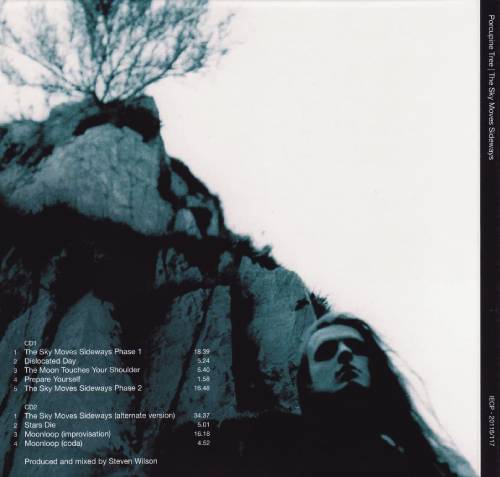
30.5.25
CURVED AIR — Air Cut (1973-1996) Two Version | APE + FLAC (tracks+.cue), lossless
.jpg)
Tracklist :
1. The Purple Speed Queen (1:32)
2. Elfin Boy (4:13)
3. Metamorphosis (10:38)
4. World (3:43)
5. Armin (3:42)
6. U.H.F. (5:07)
7. Two-Three-Two (4:10)
8. Easy (6:40)
Credits :
Kirby Gregory - Guitars, Vocals
Eddie Jobson - Keyboards, Violin, Vocals
Sonja Kristina - Vocals, Acoustic Guitar
Jim Russell - Drums, Percussion
Mike Wedgwood - Bass, Acoustic Guitar, Vocals (Lead Vocal on Two-Three-Two)
TAÏ PHONG = タイ・フォン = 恐るべき静寂 — Discography 1975-2013 | RM | 5 Albums | Pick Up Your Music Series | Mini LP | FLAC (image+.tracks+.cue), lossless

TAÏ PHONG —Taï Phong (1975)
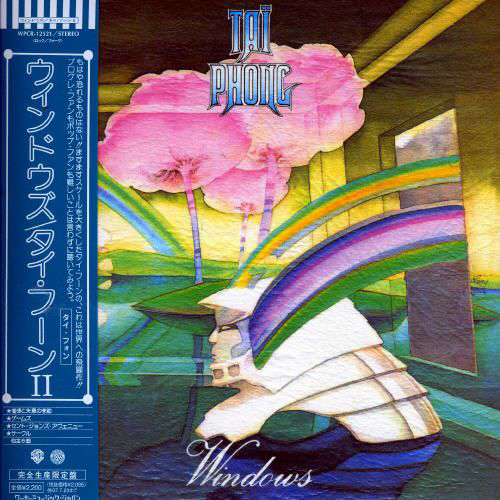
TAÏ PHONG — Last Flight (1979)
TAÏ PHONG — Sun (2000) 
TAÏ PHONG — Return of the Samurai (2013)

GRAVY TRAIN — Gravy Train (1970) Mini LP | Three Version | WV + FLAC (image+.tracks+.cue), lossless
 Jethro Tull and Comus had a baby, and they named it Gravy Train. That's not strictly accurate, of course, but as the band's eponymous debut opens with the fluid changes of "The New One," it's not too far of a reach, either. Richly harmonic, daringly jam-laden, and peppered with guitar roars that simply defy comparison, Gravy Train is the sound of the British underground at its most joyously liberated peak -- a time when a bunch of apparent freaks could simply go into a major recording studio and let rip. Except Gravy Train's concept of "letting rip" has more in common with a symphony orchestra than the Edgar Broughton Band. Without, of course, the orchestra. But there's a moment in the midst of "Think of Life" that cannot help but put one in mind of later Deep Purple, as the flute and guitar battle for supremacy, while the blues workout "Coast Road" is as breathtaking as any of that genre's better-feted exponents. If Gravy Train has any faults whatsoever, the fascination with peculiar vocal effects can grow a little wearing, especially as frontman Norman Barrett already appears to have a fabulous range of his own -- "Dedication to Sid," in particular, glories in such trickery, although the heartbeat bassline that runs through the number is so hypnotic that it's easy to forget everything else that's going on. In fact, Gravy Train is littered with moments like that, an album of so many surprises that even when you think you know it, you can still find something else you'd never noticed. And it all adds up to a genuine minor classic. Dave Thompson
Tracklist :
1 The New One 5:15
2 Dedication To Sid 7:17
3 Coast Road 6:46
4 Enterprise 6:20
5 Think Of Life 5:10
6 Earl Of Pocket Nook 16:11
Credits :
Bass, Vocals – Les Williams
Drums – Barry Davenport
Engineer – Keith Harwood
Flute [Alto, Simultaneous Alto And Tenor], Vocals – J.D. Hughes
Lead Vocals, Guitar – Norman Barrett
Written-By, Composed By – Gravy Train.jpg)
29.5.25
KIN PING MEH — Nº2 (1972) Two Version | WV + FLAC (image+.tracks+.cue), lossless
 Again, this is the album that does not have prog component in the music. However, it's nice to enjoy this classic rock band. The music offered here is similar with bands like Tea (Germany), Humble Pie, or Mountain with unique singing style of its lead vocalist, Wrener Stephan. The opening track "Come Down to the Riverside" (3:13) is like a combination of The Beatles and Lynyrd Skynyrd. It seems like the band tried to explore the southern rock style, especially through the guitar licks as well as singing style. It's really enjoyable. It moves in similar vein into next track "Don't Force Your Horse" (3:46) where guitar still plays critical role in putting the music style of the song. Supported with vintage recording quality, enjoying this track gives me a "different" experience that brings me back to the glory days of seventies where rock music dominated the music industry.
The Beatles cover "Come Together" (6:00) is another place that I can find joy of listening to this album. No, it's not that due to the original version of this song it's already excellet, but the re-arrangement by Kin Ping Meh makes it "something new" for me and it has made me repeating this song over and over whenever it reaches third track. I like the fact that the guitar sound has been made different than those of original version. It reminds me to the guitar player of a band named as MAHOGANY RUSH - the guitarist is Frank Marino. The guitar solo at the end of this track is really stunning.
"Together Jam" (4:55) starts with jamming mode through guitar solo supported with bass guitar and drums, plus organ. The use of two guitars separated with left and right channel has made this composition is really excellent. The guitar solo is really the main thing from this track and it satisfies me to the bone! The bass guitar is also given a chance to perform its solo. It's an uplifting track!
"Liveable Ways" (8:00) is probably the progressive attempt that the band tried to make. The combined guitar and bass guitar works at the opening of the track is truly stunning. The vocal line is also excellent, performed with energy. The song also inserts some ambient portion right after intro part. "Day Dreams" (7:56) provides musical break through ambient nuance at intro part with guitar fills. "Very Long Ago" (2:54) is a country rock music, using banjo as main rhythm section. The album concludes nicely with "I Wanna Be Lazy" (2:58) in Southern style. progarchives
Tracklist :
1. Come Down To The Riverside 3:13
Written-By – Groß / Stephan
2. Don't Force Your Horse 3:46
Written-By – Dr. Gassenmaier / Groß
Bagpipes [Dudelsack] – Dieter Kuhlmann
3. Come Together 6:00
Written-By – Lennon/McCartney
4. Together Jam 4:55
Written-By – Kin Ping Meh
5. Livable Ways 8:00
Written-By – Frank Dostal /Groß
6. Day Dreams 7:56
Written-By – Dr. Gassenmaier / Groß / Stephan
7. Very Long Ago 2:54
Written-By – Willie Wagner
Banjo – Erich Doll
8. I Wonna Be Lazy 2:58:5
Written-By – Reichel / Dostal
– BONUS TRACKS –
9 Sometime (Single Version) 4:33
Written-By – Wagner / Schmitt
10 Sunday Morning Eve 3:58
Written-By – Wroe /Mrozek / Groß
Credits :
Bass, Vocals – Torsten Herzog
Drums, Percussion – Kalle Weber
Electric Guitar, Guitar [Fingerstyle Guitar] – Uli Groß
Guitar – Gerhard (Gagey) Mrozeck
Guitar, Vocals – Willie Wagner
Lead Vocals, Acoustic Guitar, Percussion – Werner Stephan
Organ, Piano, Electric Piano, Mellotron 400, Vocals – Fritz Schmitt
BIRTH CONTROL — Backdoor Possibilities (1976-1997) Two Version | FLAC (image+.tracks+.cue), lossless

Backdoor Possibilities emerges as a rather fragmented and patchy concept album about a businessman who becomes trapped in an elevator with death himself, who, in turn, tries to convince the man that life is more important than schedules and the blandness of everyday ordinance. With 14 tracks that mostly fall under the five-minute range, Birth Control's main story line loses its grasp quickly, but the music itself almost instantly takes over and blurs the band's allegorical idea, replacing it with detours of jazz- and rock-styled excursions. The album arises as an art rock piece with progressive rock penchants surrounding the perimeter, using a multitude of peculiar instruments like finger cymbals, congas, sand blocks, and sonor drums to instill the abstractness of the intentioned concept. Both of the six-minute tracks, "Behind Grey Walls" and "No Time to Die," are the best at keeping the anecdote intact while dishing out the album's heartiest example of Birth Control's progressive flair. Zeus B. Held's entourage of synthesizers, as well as his sporadic use of the alto saxophone, grant the majority of the songs their ornamental appeal. Some of the shorter pieces, like "Subterranean Escape" and "Legal Labyrinth," have the band trying so hard to catapult the philosophies of their esoteric yarn to the forefront that some of their instrumental resolution is thrown to the wayside. Although a few of the songs are a minor diversity, Backdoor Possibilities still ingrains the root of Birth Control's progressive sound, and the relevance of the album's concept really isn't missed. Brain's 1997 reissue includes two additional bonus tracks that are noticeable additions. Mike DeGagne
Tracklist :
One First Of April :
1. Prologue
2. Physical And Mental Short Circuit
3. Subterranean Escape
Beedeepees :
4. Film Of Life
5. Childhood Flash-Back
6. Legal Labyrinth
7. Futile Prayer
La Cigüena De Zaragoza:
8. The Farrockaway Ropedancer
9. Le Moineau De Paris
10. Cha Cha D'amour
11. Behind Grey Walls
12. No Time To Die
– BONUS TRACKS –
13. Fall Down
14. Laugh Or Cry
Credits :
Bass, Vocals – Peter Föller
Electric Guitar, Acoustic Guitar, Vocals – Bruno Frenzel
Lead Vocals, Drums, Marimba, Timpani, Vibraslap, Finger Cymbals, Percussion [Guero], Cabasa, Percussion [Flexitone], Congas, Claves, Percussion, Instruments [Sand Blocks] – Bernd 'Nossi' Noske
Organ, Organ [Hammond], Electric Piano, Synthesizer, Organ [Farfisa], Grand Piano, Alto Saxophone, Tubular Bells, Vocals, Synthesizer [Arp String Ensemble] – Zeus B. Held
Written-By – Bernd Noske (tracks: 5, 9), Bruno Frenzel (tracks: 4 to 11, 13, 14), Zeus B. Held (tracks: 1 to 7, 11, 12, 14)
28.5.25
ANEKDOTEN — Vemod (1993) Two Version | APE + FLAC (image+.tracks+.cue), lossless

Anekdoten's debut shows them a little rougher, more Gothic in tone, and less tonally subtle than in later years, but compelling nonetheless. From the crashing bass and Mellotron in the opening track "Karelia," it's clear that King Crimson reigns over their work -- not to mention that it features riffs nicked from Crimson's "Easy Money." "Wheel" also has the dissonance and horns of the Lizard album. But they are creating something unique here, as the gentle instrumental "Longing" attests. While Anekdoten hadn't quite reached its potential yet -- "Where Solitude Remains" still shows Liljestrom's vocals to be a little too precise, and not as pleasingly smoky as in "Nucleus" -- this first album shows a band of great promise. Paul Collins
Tracklist :
1 Karelia 7:20
Written-By – Dahlberg, Berg
2 The Old Man & The Sea 7:50
Written-By – Liljeström, Berg
3 Where Solitude Remains 7:20
Written-By – Liljeström, Berg
4 Thoughts In Absence 4:10
Written-By – Berg
5 The Flow 6:58
Written-By – Dahlberg, Liljeström, Berg, Nordin
6 Longing 4:50
Written-By – Dahlberg, Berg
7 Wheel 7:50
Written-By – Dahlberg, Liljeström, Berg, Nordin
– BONUS TRACK –
8. Sad Rain 10:14
Lyrics By, Music By – Nicklas Berg
Credits :
Bass, Vocals – Jan Erik Liljeström
Cello, Mellotron, Vocals – Anna Sofi Dahlberg
Flugelhorn [Flügelhorn], Cornet – Pär Ekström
Guitar, Mellotron – Nicklas Berg
Percussion – Peter Nordin
Piano – Per Wiberg
ARTI & MESTIERI — Tilt : Immagini Per Un Orecchio (1974) RM | Two Version | APE + FLAC (tracks+.cue), lossless

Outstanding fusion band from Italy. All the power delivered by the insane drumming of Furio CHIRICO is counterpointted by the beautiful violin passages, as well as the killer guitar work. On their early albums, ARTI e MESTIERI made a dynamic, complex and elaborately crafted rock, folk, and fusion blend, that featured much violin and keyboards.
ARTI & MESTIERI, considered one of the most influent cult bands in the italian and european prog scene will astonish the audience confirming, 25 years after its release, that "TILT" is still a milestone for two generations of fans. Both albums that came out on CD, "Tilt" and "Giro Di Valzer Per Domani", are real masterpieces of the genre. A real must for all fusion lovers! Progarchives
Tracklist :
1. Gravità 9,81 (4:05)
2. Strips (4:39)
3. Corrosione (1:37)
4. Positivo / Negativo (3:29)
5. In Cammino (5:36)
6. Farenheit (1:15)
7. Articolazioni (13:24)
8. Tilt (2:29)
Total Time 36:34
Line-up / Musicians
Luigi "Gigi" Venegoni - Electric & Acoustic Guitars, ARP2600 Synthesizer
Beppe Crovella - Acoustic & Electric Pianos, ARP2600 & Eminent Synths, Mellotron, Hammond Organ
Giovanni Vigliar - Violin, Vocals, Percussion
Arturo Vitale - Soprano & Baritone Saxes, Clarinet & Bass Clarinet, Vibraphone
Marco Gallesi - Bass
Furio Chirico - Drums, Percussion .jpg)
BUON VECCHIO CHARLIE — Buon Vecchio Charlie (1971) RM | Two Version | FLAC (tracks+.cue), lossless

Formed in Rome in 1970, Buon Vecchio Charlie are the all-but unknown creators of what has since been described among the greatest of all Italian prog albums, a self-titled effort recorded around spring 1971 for the Venice-based Suono label, but left to languish on the shelf for the next twenty years. Comprising three tracks, including a mammoth adaptation of "The Hall Of The Mountain King", it was finally unearthed by Melos in 1992.
Buon Vecchio Charlie themselves continued working into 1972, with several band members joining singer-songwriter Beppe Palomba on his album A Rosa, a Giovanna e alle altre. (Two tracks from this album were included on the late 1999 Akarma label reissue of Buon Vecchio Charlie.) From there, guitarist Luigi Calabrò, bassist Paolo Damiani and drummer Rino Sangiorgio formed a new band, the jazz-rock outfit Bauhaus - no relation, of course, to the British goths of early 1980s renown! . Dave Thompson
Tracklist :  1. Venite Giù Al Fiume 12:09
Music By – Luigi Calabrò
2. Evviva La Contea Di Lane 6:35
Music By – Richard Benson
3. All'Uomo Che Raccoglie I Cartoni (15:00)front.jpg)
Music By – Luigi Calabrò
– BONUS TRACKS –
4. Rosa 4:33
5. Il Guardiano Della Valle 2:39
Credits :
Acoustic Guitar, Electric Guitar, Vocals – Luigi Calabrò
Bass – Paolo Damiani
Drums – Rino Sangiorgio
Keyboards – Sandro Centofanti
Lead Vocals, Twelve-String Guitar – Richard Benson
Tenor Saxophone, Flute – Sandro "Cicero" Cesaroni%20Digipack-Front.jpg)
+ last month

.jpg)


.jpg)


KAY STARR — Capitol Collectors Series (1991) Two Version | FLAC (image+.tracks+.cue), lossless
A good collection of Starr's '50s pop material includes "Hoop Dee Doo," "If You Love Me (Really Love Me)," ...
.jpg)